Davidson Historic District

The National Park Service has not published a boundary polygon for this district; the map shows the listed properties inside it and the district's reference point.
Why it's listed
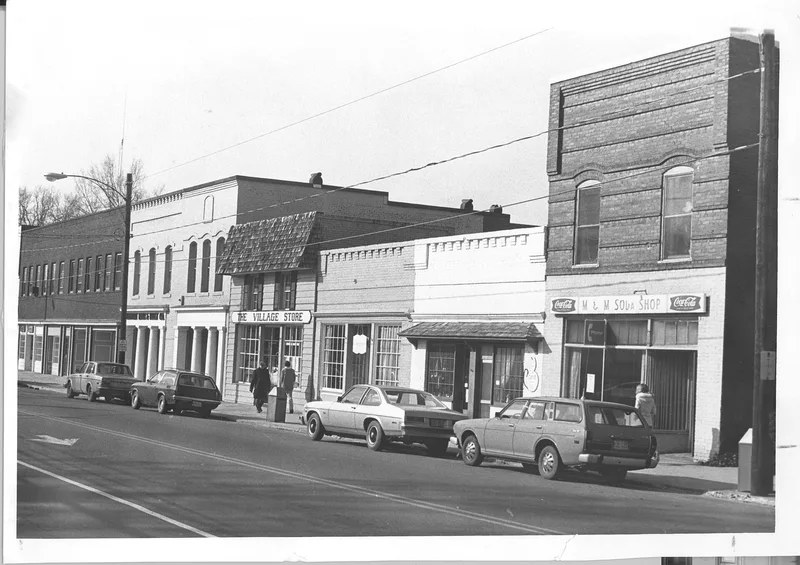
Davidson's historic core grew up around Davidson College, founded in 1837 by the Presbyterian Church, and the district preserves much of that town from the antebellum period to the mid-twentieth century. Elm Row and Oak Row, dormitories built in 1837 as two of the college's original eight buildings, are the oldest properties in the district. Eumenean and Philanthropic Halls, erected in 1849-1850 for the rival debating societies and built by local builder Lewis Dinkins, are porticoed Greek Revival temples. The Main Street business district was rebuilt after a fire in 1906 with one- and two-story brick commercial buildings, many by local builder B. C. Deal. The district also includes the Linden Cotton Factory, begun in 1890, and the Delburg Cotton Mills, opened in 1908, both long brick mill buildings typical of the Piedmont textile boom. The district is listed for its connection to college life, its commercial and industrial development, and its range of architectural styles.
Machine-generated summary. This summary was generated by a language model from the official nomination document and has not been reviewed line by line by an editor. It may contain errors. Check the source document before relying on any detail. Source: nomination document (PDF) · catalog entry. Generated October 2026 (model claude-haiku-5-5, prompt v1.1-2026-10-29).
| Period of significance | 1837-1959 |
|---|---|
| Styles | Greek Revival; Gothic; Italianate; Queen Anne; Colonial Revival; Tudor Revival; Classical Revival; Late Gothic; Bungalow/Craftsman; Modern Movement; Commercial Style |
| Areas of significance | Architecture, Commerce, Education, Industry |
| Acreage | 310 |
| Boundary source | not published |
| Full listing page | Davidson Historic District (property record) |
What listing means for this property
This is a historic district. Buildings within its boundary are either contributing (they add to the district's significance) or non-contributing. Owners of contributing income-producing buildings can claim the 20% federal rehabilitation tax credit; homeowners should look at state credits. National Register districts impose no design review by themselves; a local historic district ordinance, if one exists, does (the difference explained).
General information, not legal or tax advice. Rules change; confirm with your State Historic Preservation Office or a qualified adviser.