Crabtree Creek Recreational Demonstration Area

Why it's listed
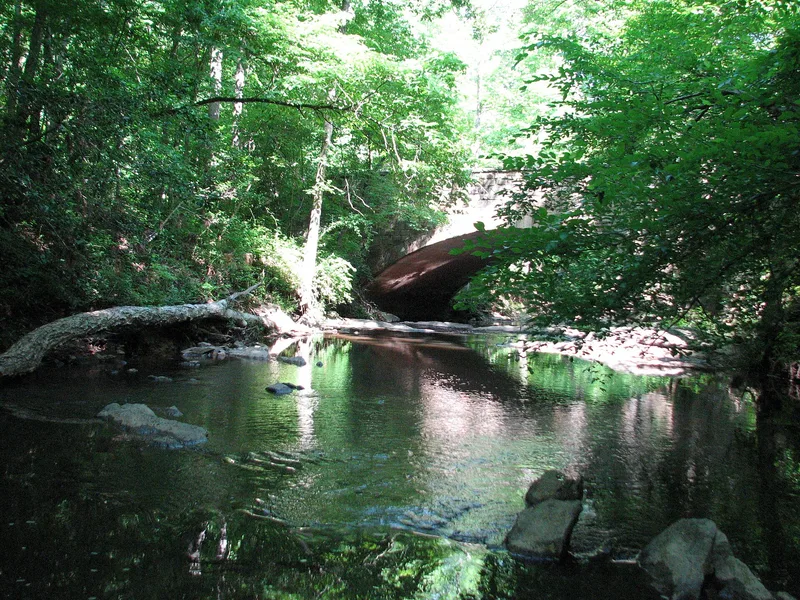
Crabtree Creek Recreational Demonstration Area is a roughly 4,900-acre park district in Raleigh, North Carolina, now known as William B. Umstead State Park. The Civilian Conservation Corps built it between 1936 and 1941 on worn-out farmland, following a 1940 master plan. It includes four group camps with ninety-two cabins and four lodges, two picnic areas with stone fountains and fireplaces, two stone-veneered bridges, more than thirty miles of trails, and two lakes created by damming Sycamore and Reedy creeks. Buildings follow the rustic style described in the National Park Service pattern book Park and Recreation Structures, with frame construction, stone chimneys and rough-sawn wood siding. Reforestation, check dams and firebreaks record the soil and forest reclamation work. The federal government sold the park to North Carolina in 1943. It is significant as an example of New Deal public works, rustic architecture, landscape design, recreation and conservation, and its camps still serve children's groups today.
Machine-generated summary. This summary was generated by a language model from the official nomination document and has not been reviewed line by line by an editor. It may contain errors. Check the source document before relying on any detail. Source: nomination document (PDF) · catalog entry. Generated October 2026 (model claude-sonnet-5-5, prompt v1.0-2026-10-29).
| Period of significance | 1933-1943 |
|---|---|
| Styles | Other: NPS Rustic |
| Areas of significance | Architecture, Landscape Architecture, Entertainment/Recreation, Politics/Government, Conservation |
| Acreage | 4912.2 |
| Boundary source | NPS cultural-resource GIS polygon |
| Full listing page | Crabtree Creek Recreational Demonstration Area (property record) |
What listing means for this property
This is a historic district. Buildings within its boundary are either contributing (they add to the district's significance) or non-contributing. Owners of contributing income-producing buildings can claim the 20% federal rehabilitation tax credit; homeowners should look at state credits. National Register districts impose no design review by themselves; a local historic district ordinance, if one exists, does (the difference explained).
General information, not legal or tax advice. Rules change; confirm with your State Historic Preservation Office or a qualified adviser.