Capitol Heights Historic District

Why it's listed
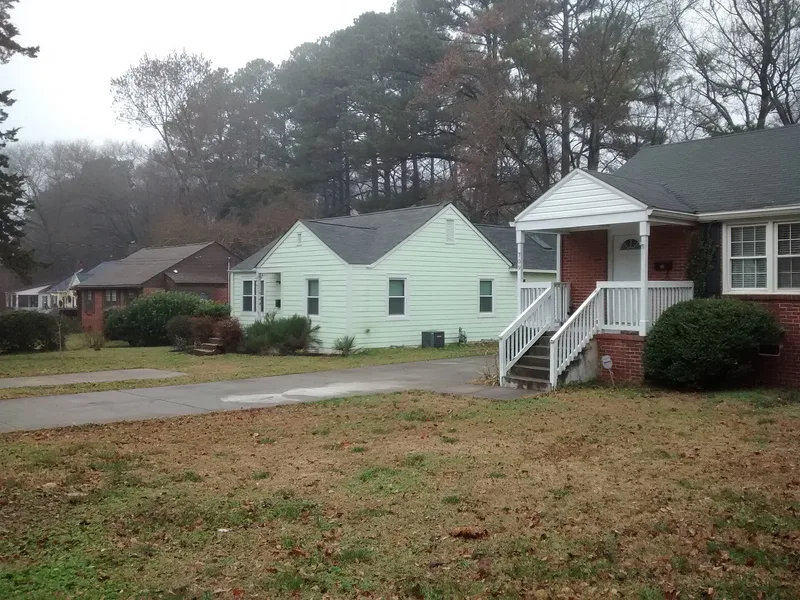
Capitol Heights is a residential district on the northeast edge of Raleigh, North Carolina, laid out in a grid of six blocks and platted in May 1946. Its 84 contributing houses were built between 1947 and 1949, mostly one-story, side-gabled Minimal Traditional dwellings with two or three bedrooms. Developers Raymond D. Kelly and G. B. Wynne sold parcels in 1946 to Clancy & Scott, Inc. and George Henry Wright, and the two firms erected most of the houses. The neighborhood reflects the postwar housing shortage and the financing made available through FHA mortgage insurance and VA home loans. Its lots, streets and houses form a largely uniform collection that illustrates the speculative subdivision type of the period. The district is significant for its architecture and for its well-preserved group of Minimal Traditional speculative houses.
Machine-generated summary. This summary was generated by a language model from the official nomination document and has not been reviewed line by line by an editor. It may contain errors. Check the source document before relying on any detail. Source: nomination document (PDF) · catalog entry. Generated October 2026 (model claude-haiku-5-5, prompt v1.1-2026-10-29).
| Period of significance | c. 1946-1949 |
|---|---|
| Styles | Minimal Traditional |
| Areas of significance | Architecture, Community Planning and Development |
| Acreage | 30 |
| Boundary source | NPS cultural-resource GIS polygon |
| Full listing page | Capitol Heights Historic District (property record) |
What listing means for this property
This is a historic district. Buildings within its boundary are either contributing (they add to the district's significance) or non-contributing. Owners of contributing income-producing buildings can claim the 20% federal rehabilitation tax credit; homeowners should look at state credits. National Register districts impose no design review by themselves; a local historic district ordinance, if one exists, does (the difference explained).
General information, not legal or tax advice. Rules change; confirm with your State Historic Preservation Office or a qualified adviser.