Cape Lookout Village Historic District

Why it's listed
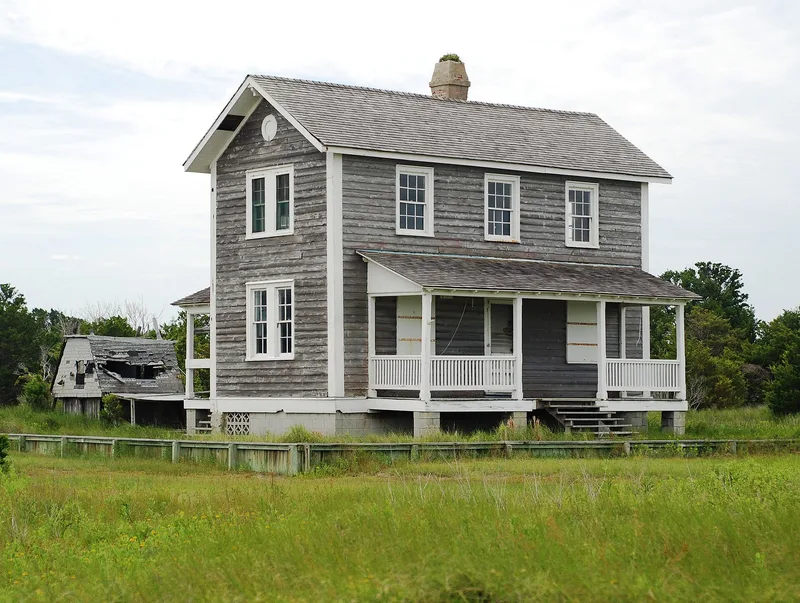
Cape Lookout Village is a small cluster of lighthouse, life-saving, Coast Guard, fishing and vacation buildings on the southern tip of Core Banks, North Carolina, now within Cape Lookout National Seashore and accessible only by boat. The district spans about 300 acres and has 27 contributing resources. Its oldest element is the 1859 brick lighthouse, joined by a 1873 keeper's quarters, an 1888 Life Saving Station and boathouse, a 1907 keeper's quarters and a 1916-1917 Coast Guard station. Four traditional engaged-porch houses survive from a village that once had thirty-some homes, along with early vacation cottages such as the 1920s Seifert-Davis House and the circa 1930 Casablanca. Ruins of World War II harbor defenses for Beaufort Inlet also remain. The district was recognized for its role in maritime and social history and for architecture that reflects the shift from fishing village to summer resort, in a setting where traditional Outer Banks settlements are rare.
Machine-generated summary. This summary was generated by a language model from the official nomination document and has not been reviewed line by line by an editor. It may contain errors. Check the source document before relying on any detail. Source: nomination document (PDF) · catalog entry. Generated October 2026 (model claude-sonnet-5-5, prompt v1.0-2026-10-29).
| Period of significance | 1857-1948 |
|---|---|
| Styles | Queen Anne, Bungalow/Craftsman, Shingle Style, Other: Outer Banks house |
| Areas of significance | Social History, Architecture, Maritime History |
| Acreage | 810 |
| Boundary source | NPS cultural-resource GIS polygon |
| Full listing page | Cape Lookout Village Historic District (property record) |
What listing means for this property
This is a historic district. Buildings within its boundary are either contributing (they add to the district's significance) or non-contributing. Owners of contributing income-producing buildings can claim the 20% federal rehabilitation tax credit; homeowners should look at state credits. National Register districts impose no design review by themselves; a local historic district ordinance, if one exists, does (the difference explained).
General information, not legal or tax advice. Rules change; confirm with your State Historic Preservation Office or a qualified adviser.