Brunswick Town Historic District

Why it's listed
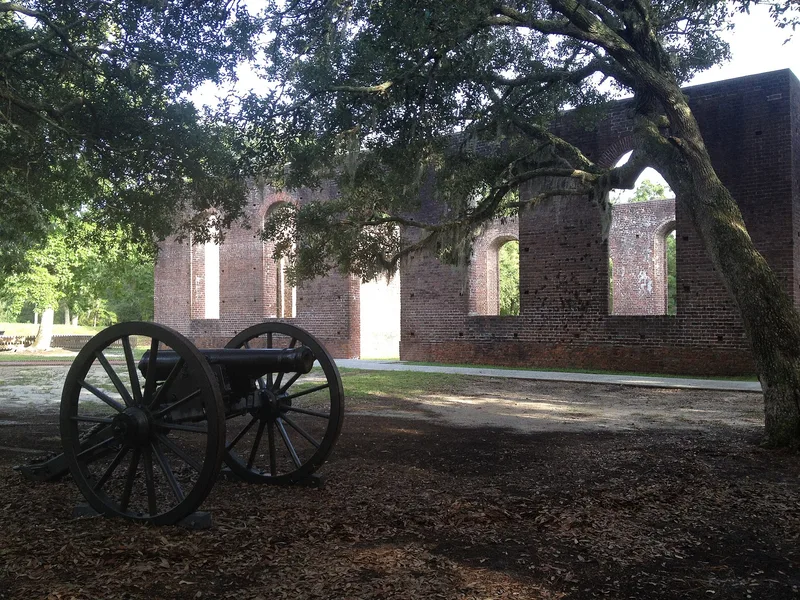
Brunswick Town Historic District covers about 120 acres along the Cape Fear River in Brunswick County, North Carolina. It contains the ruins of a colonial port town and the earthworks of Civil War Fort Anderson. Founded in the early 1700s, Brunswick was home to merchants, sea captains and officials, and in 1765 a group of citizens surrounded Governor Tryon's house at Russellborough to protest the Stamp Act, an early use of arms against British authority. The town declined as Wilmington grew and was burned during the British raid of 1776. In 1862 Confederate forces built Fort Anderson on the site, incorporating the walls of St. Philips Church, and abandoned it in February 1865. Archeologist Stanley South excavated about 25 of 65 foundations between 1958 and 1968, including houses, a public house, wells and a smokehouse. Visitors walk trails past the ruins, the pond, the batteries and the church.
Machine-generated summary. This summary was generated by a language model from the official nomination document and has not been reviewed line by line by an editor. It may contain errors. Check the source document before relying on any detail. Source: nomination document (PDF) · catalog entry. Generated October 2026 (model claude-sonnet-5-5, prompt v1.0-2026-10-29).
| Areas of significance | Historic - Non-Aboriginal, Military, Exploration/Settlement, Science, Politics/Government |
|---|---|
| Acreage | 225 |
| Boundary source | NPS cultural-resource GIS polygon |
| Full listing page | Brunswick Town Historic District (property record) |
What listing means for this property
This is a historic district. Buildings within its boundary are either contributing (they add to the district's significance) or non-contributing. Owners of contributing income-producing buildings can claim the 20% federal rehabilitation tax credit; homeowners should look at state credits. National Register districts impose no design review by themselves; a local historic district ordinance, if one exists, does (the difference explained).
General information, not legal or tax advice. Rules change; confirm with your State Historic Preservation Office or a qualified adviser.