Bethania Historic District (Boundary Increase)

Why it's listed
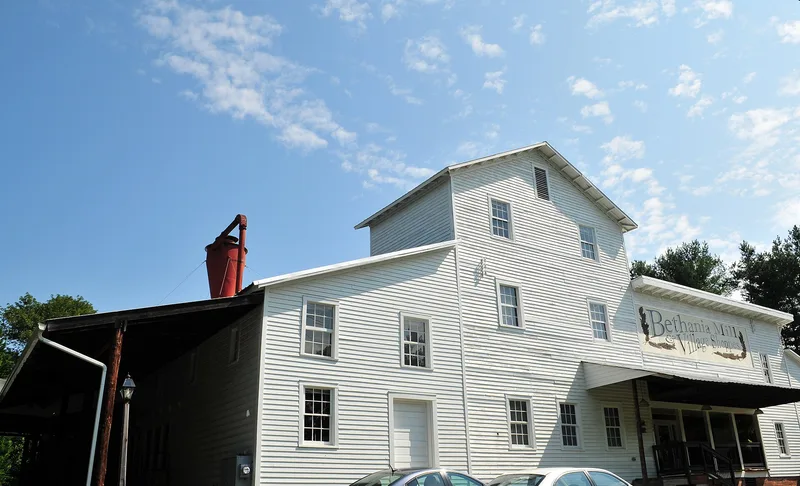
Bethania was founded in 1759 as the first planned town in the Moravians' Wachovia Tract, on a 2,500-acre Town Lot surveyed by Philip Christian Gottlieb Reuter. This amendment enlarges an earlier district that protected only the early houses, church and graveyard. The added area, nearly 500 acres, takes in the surrounding working landscape: fertile bottomlands along Muddy Creek, orchard lots, upland fields, and a road system laid out in the eighteenth century. It also includes the stone and timber remains of the 1784 Bethania Grist Mill, with its dam, race and cellar holes. Late nineteenth and early twentieth century houses, including Bungalow, Queen Anne and Colonial Revival examples, reflect continued occupation by descendants of early residents. The expansion counts 45 contributing and 76 noncontributing buildings, six contributing sites and nine contributing structures. Its argument is that the village and its farmland, roads and creeks together preserve the original Moravian town plan.
Machine-generated summary. This summary was generated by a language model from the official nomination document and has not been reviewed line by line by an editor. It may contain errors. Check the source document before relying on any detail. Source: nomination document (PDF) · catalog entry. Generated October 2026 (model claude-sonnet-5-5, prompt v1.0-2026-10-29).
| Styles | 19th/20th C. basic house types; Bungalow/Craftsman; Cape Cod; Queen Anne; Colonial Revival |
|---|---|
| Areas of significance | Industry, Community Planning and Development, Agriculture, Exploration/Settlement |
| Acreage | 450 |
| Boundary source | NPS cultural-resource GIS polygon |
| Full listing page | Bethania Historic District (Boundary Increase) (property record) |
What listing means for this property
This is a historic district. Buildings within its boundary are either contributing (they add to the district's significance) or non-contributing. Owners of contributing income-producing buildings can claim the 20% federal rehabilitation tax credit; homeowners should look at state credits. National Register districts impose no design review by themselves; a local historic district ordinance, if one exists, does (the difference explained).
General information, not legal or tax advice. Rules change; confirm with your State Historic Preservation Office or a qualified adviser.