Asheville High School

Why it's listed
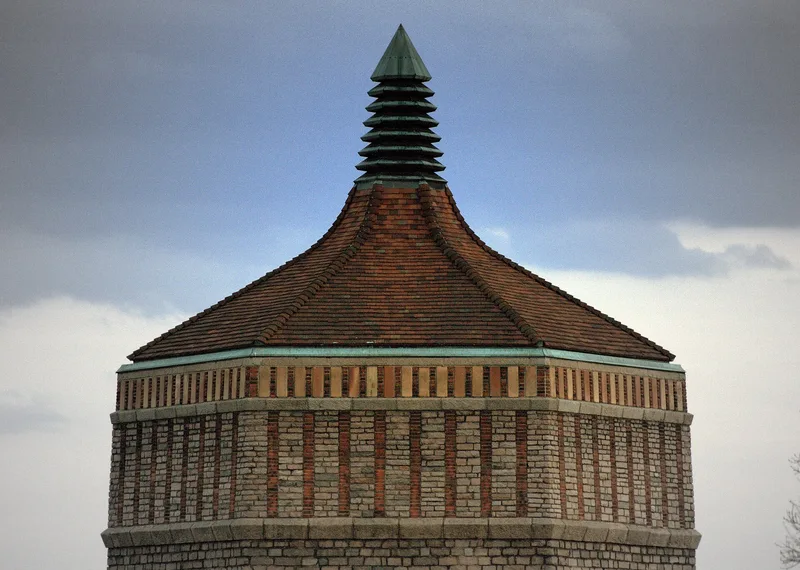
Asheville High School occupies a natural promontory above McDowell Street, just south of downtown Asheville. Designed by Douglas Ellington and completed in 1929, the three-story, steel-framed building combines Art Deco and Italian Renaissance elements. Its walls are rough-cut pink granite, the roofs are tile, and the gutters and roof ventilators are copper. A hexagonal central rotunda with a ten-sided entry loggia anchors the plan, and academic, auditorium/cafeteria, gym and shop wings radiate from it. The district includes four contributing resources: the main building, the original heat plant, Ellington's terraced landscape plan, and the ballfield he planned in 1929 and that was built in 1934. Ten later resources, including bleachers, a track, a press box and a maintenance shop, are considered non-contributing. The only major addition is a 1974 media center joined to the rear by a covered walkway. The description notes that the school retains a high degree of its original architectural integrity and is still used for education.
Machine-generated summary. This summary was generated by a language model from the official nomination document and has not been reviewed line by line by an editor. It may contain errors. Check the source document before relying on any detail. Source: nomination document (PDF) · catalog entry. Generated October 2026 (model claude-sonnet-5-5, prompt v1.0-2026-10-29).
| Styles | Art Deco / Italian Renaissance |
|---|---|
| Areas of significance | Architecture, Education, Landscape Architecture |
| Acreage | 21.3 |
| Boundary source | NPS cultural-resource GIS polygon |
| Full listing page | Asheville High School (property record) |
What listing means for this property
This is a historic district. Buildings within its boundary are either contributing (they add to the district's significance) or non-contributing. Owners of contributing income-producing buildings can claim the 20% federal rehabilitation tax credit; homeowners should look at state credits. National Register districts impose no design review by themselves; a local historic district ordinance, if one exists, does (the difference explained).
General information, not legal or tax advice. Rules change; confirm with your State Historic Preservation Office or a qualified adviser.