Agricultural and Technical College of North Carolina Historic District

Why it's listed
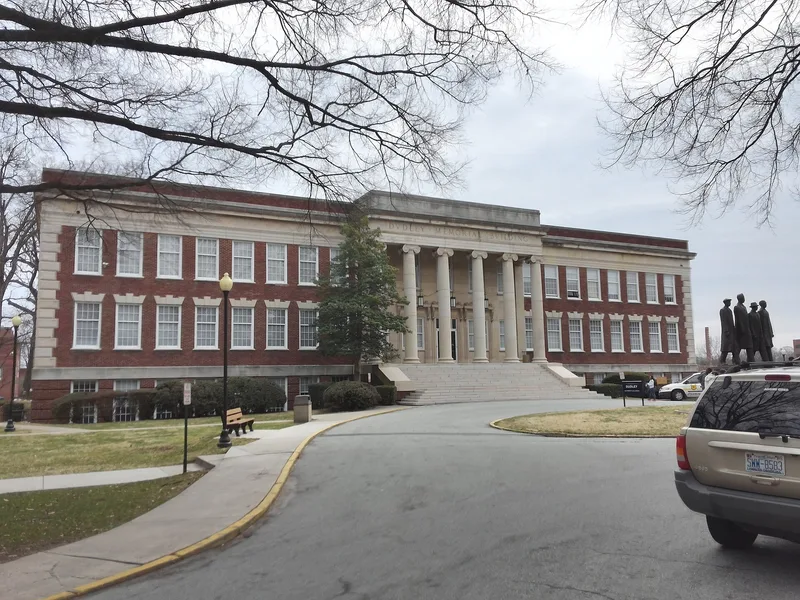
At the northwest corner of North Carolina A&T State University in Greensboro, five red brick buildings and a landscaped entrance lawn form the historic core of the campus. Dudley Memorial Building (1930), Noble Hall (1922), Morrison Hall (1923-24), Murphy Hall (1923) and Richard B. Harrison Auditorium (1939) display varied interpretations of Classical Revival design, with stone quoins, string courses, keystoned arches and, at Dudley, an Ionic portico. Charles C. Hartmann designed Dudley Memorial, and Leon McMinn of the Federal Works Agency designed the auditorium. The college was founded in 1891 as North Carolina's land-grant institution for black students and moved to Greensboro in 1893. None of its original buildings survive. The 1920s buildings were paid for by a large state appropriation for black education, and the auditorium was built by the Public Works Administration. Exteriors are largely unaltered, and the buildings still serve academic, administrative and residential uses.
Machine-generated summary. This summary was generated by a language model from the official nomination document and has not been reviewed line by line by an editor. It may contain errors. Check the source document before relying on any detail. Source: nomination document (PDF) · catalog entry. Generated October 2026 (model claude-sonnet-5-5, prompt v1.0-2026-10-29).
| Period of significance | 1922-1939 |
|---|---|
| Styles | Classical Revival; Colonial Revival |
| Areas of significance | Black, Education, Architecture |
| Acreage | 10.1 |
| Boundary source | NPS cultural-resource GIS polygon |
| Full listing page | Agricultural and Technical College of North Carolina Historic District (property record) |
What listing means for this property
This is a historic district. Buildings within its boundary are either contributing (they add to the district's significance) or non-contributing. Owners of contributing income-producing buildings can claim the 20% federal rehabilitation tax credit; homeowners should look at state credits. National Register districts impose no design review by themselves; a local historic district ordinance, if one exists, does (the difference explained).
General information, not legal or tax advice. Rules change; confirm with your State Historic Preservation Office or a qualified adviser.