Wiawaka Holiday House
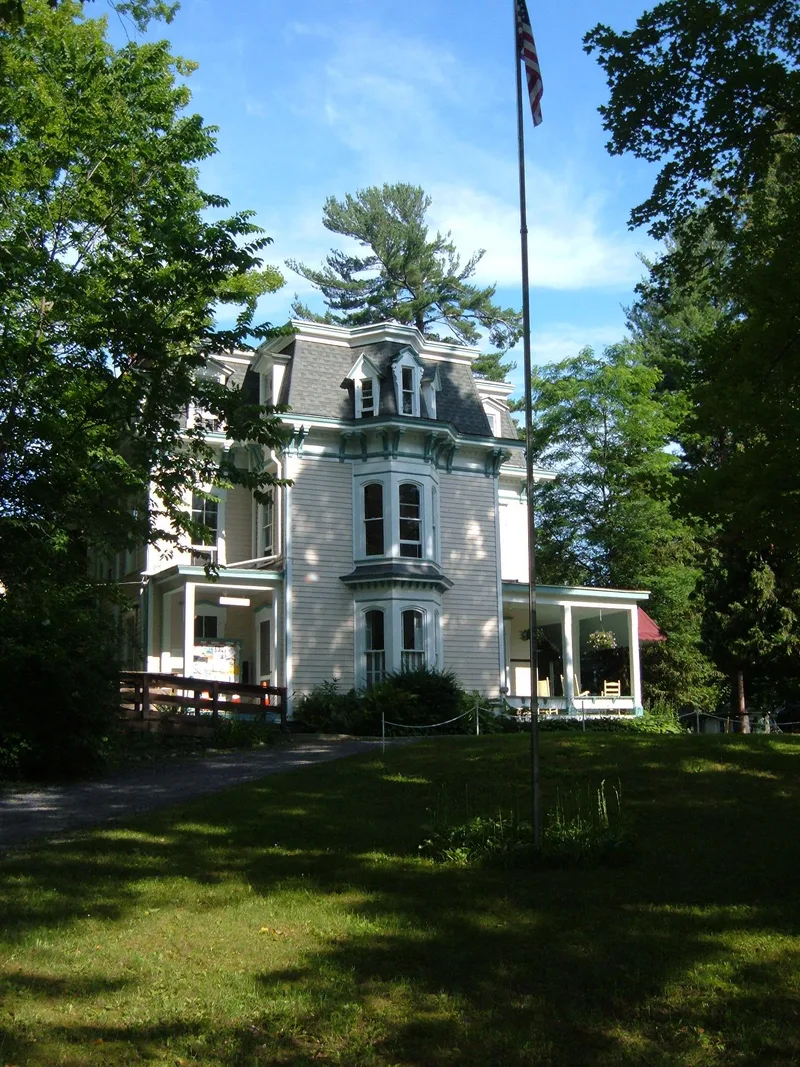

Why it's listed
Wiawaka Holiday House occupies about 60 acres of lakefront and wooded hillside on the southeastern shore of Lake George. The site was once home to the United States Hotel, later the Crosbyside, and three buildings from that hotel survive: Fuller House (c.1876) and Mayflower and Rose Cottages (both c.1873), all in the Second Empire style. In 1903 the property was taken over as a non-profit retreat offering low-cost vacations to working women, founded by Mary Fuller with support from Katrina and Spencer Trask and George Foster Peabody. A fire in 1905 destroyed the hotel, after which a boathouse, Pine Cottage, an ice house, a barn and other buildings were added. Wakonda Lodge, built c.1905 in the Adirondack style, is also part of the district. Ten resources contribute and one 1963 motel-type building does not. The complex is listed for its social history and its intact, varied architecture, and it continues to serve its original purpose.
Machine-generated summary. This summary was generated by a language model from the official nomination document and has not been reviewed line by line by an editor. It may contain errors. Check the source document before relying on any detail. Source: nomination document (PDF) · catalog entry. Generated October 2026 (model claude-sonnet-5-5, prompt v1.0-2026-10-29).
| Period of significance | 1873 - 1948 |
|---|---|
| Styles | Late Victorian/Second Empire; Late 19th and 20th Century Revivals/Colonial Revival; Other/Adirondack Style |
| Areas of significance | Social History, Entertainment/Recreation, Architecture |
| Acreage | 59.6 |
| Boundary source | NPS cultural-resource GIS polygon |
| Full listing page | Wiawaka Holiday House (property record) |
What listing means for this property
This is a historic district. Buildings within its boundary are either contributing (they add to the district's significance) or non-contributing. Owners of contributing income-producing buildings can claim the 20% federal rehabilitation tax credit; homeowners should look at state credits. National Register districts impose no design review by themselves; a local historic district ordinance, if one exists, does (the difference explained).
General information, not legal or tax advice. Rules change; confirm with your State Historic Preservation Office or a qualified adviser.