Warrensburg Mills Historic District

Why it's listed
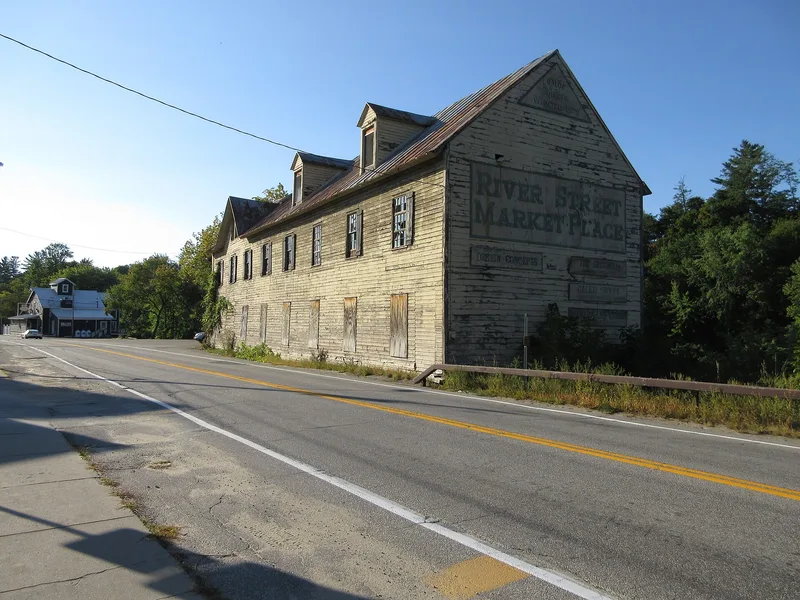
Along the south bank of the Schroon River in Warrensburg, New York, a compact district of mills, factories and workers' houses records the Adirondack lumber economy. Nearly every building is wood, including the Emerson Sawmill of about 1820, built out over the river on piles and powered by water until 1968, a small grist mill, two large shirt factories of 1878 and 1898, and a coal storage shed. Fifty-one wooden homes and one brick house line River Street, plain in form but distinguished by front verandas, many with brackets or spindled railings. A boulder mill dam and two bridges complete the district. As white pine and later hardwoods were cut out, clothing manufacturing replaced sawmilling as the main employer, a pattern that mirrors the wider region. The district was listed for this industrial history and for its modest vernacular housing. The sawmill's supporting pilings are weakening, and the local historical society has worked to save the mill from neglect.
Machine-generated summary. This summary was generated by a language model from the official nomination document and has not been reviewed line by line by an editor. It may contain errors. Check the source document before relying on any detail. Source: nomination document (PDF) · catalog entry. Generated October 2026 (model claude-sonnet-5-5, prompt v1.0-2026-10-29).
| Period of significance | 1800-1899 |
|---|---|
| Styles | Vernacular |
| Areas of significance | Industry, Architecture |
| Acreage | 40 |
| Boundary source | NPS cultural-resource GIS polygon |
| Full listing page | Warrensburg Mills Historic District (property record) |
What listing means for this property
This is a historic district. Buildings within its boundary are either contributing (they add to the district's significance) or non-contributing. Owners of contributing income-producing buildings can claim the 20% federal rehabilitation tax credit; homeowners should look at state credits. National Register districts impose no design review by themselves; a local historic district ordinance, if one exists, does (the difference explained).
General information, not legal or tax advice. Rules change; confirm with your State Historic Preservation Office or a qualified adviser.