Wallabout Industrial Historic District

Why it's listed
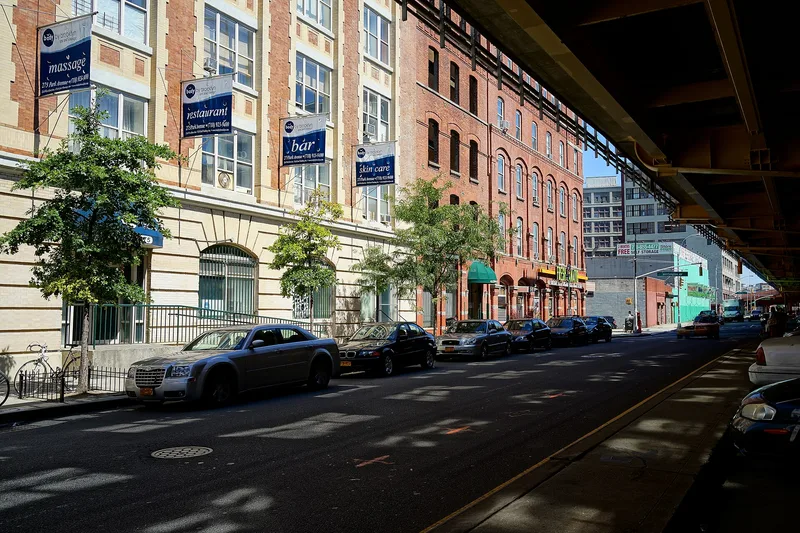
Wallabout Industrial Historic District is a group of factories, warehouses and related buildings on parts of five blocks in north-central Brooklyn, between Flushing and Park Avenues. Most were built between 1890 and the early 1940s. The earliest are brick buildings with slow-burning wood framing and cast-iron storefront pilasters, such as the Van Glahn Brothers grocery warehouse on Park Avenue, designed by J. G. Glover. Later buildings use reinforced concrete, including the large Mergenthaler Linotype Company structures and additions to the Rockwood chocolate complex. The area industrialized because of the nearby Wallabout Market, which drew food-related businesses, and because of access to the waterfront, bridges, rail connections and an elevated line that carried workers. Several buildings were already listed as part of the Rockwood Chocolate Factory Historic District. The district is significant as a record of industrial architecture and of how a Brooklyn manufacturing neighborhood developed. Many buildings are still in industrial use, while others have become residences or storage space.
Machine-generated summary. This summary was generated by a language model from the official nomination document and has not been reviewed line by line by an editor. It may contain errors. Check the source document before relying on any detail. Source: nomination document (PDF) · catalog entry. Generated October 2026 (model claude-sonnet-5-5, prompt v1.0-2026-10-29).
| Styles | Late Victorian (Neo-Grec, Romanesque Revival); industrial |
|---|---|
| Areas of significance | Architecture, Industry |
| Acreage | 10.1 |
| Boundary source | NPS cultural-resource GIS polygon |
| Full listing page | Wallabout Industrial Historic District (property record) |
What listing means for this property
This is a historic district. Buildings within its boundary are either contributing (they add to the district's significance) or non-contributing. Owners of contributing income-producing buildings can claim the 20% federal rehabilitation tax credit; homeowners should look at state credits. National Register districts impose no design review by themselves; a local historic district ordinance, if one exists, does (the difference explained).
General information, not legal or tax advice. Rules change; confirm with your State Historic Preservation Office or a qualified adviser.