Wallabout Historic District

Why it's listed
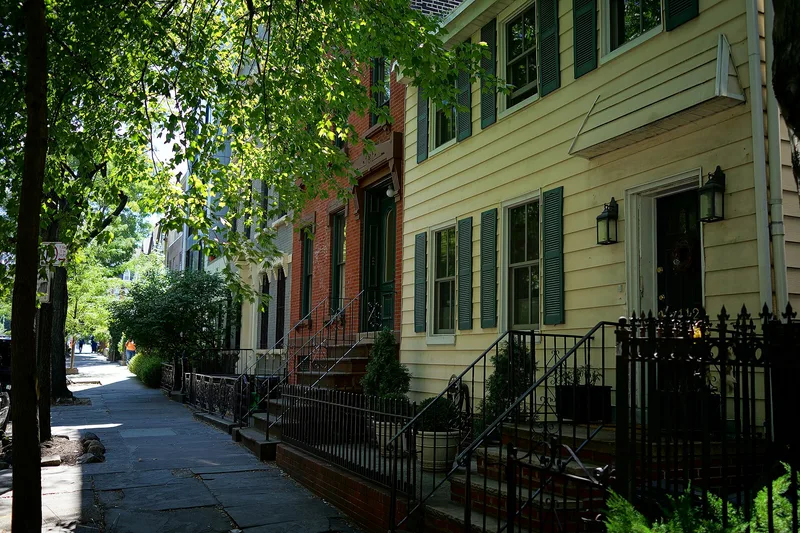
Five blocks of northern Brooklyn between Myrtle and Park Avenues make up this district of 203 contributing buildings, mostly rowhouses, flats and a few factories. Development reached the Wallabout area in the 1830s, and the earliest building is a Federal and Greek Revival clapboard house on Vanderbilt Avenue, probably built in the early 1830s. The district is notable for what is described as the largest concentration of pre-Civil War frame houses in New York City, plus rare gable-fronted Gothic Revival and Italianate row houses on Clermont and Vanderbilt Avenues. Brick Italianate and Anglo-Italianate rows followed in the 1850s and 1860s, then Neo-Grec rows by Brooklyn architects in the 1870s and 1880s. Working-class tenements include Queen Anne examples by Parfitt Brothers from 1888. Three industrial buildings, led by the Drake Brothers Bakery, add variety. Many wooden houses have been resided, but the rarity of the resource keeps its significance intact. Original ironwork and bluestone sidewalks also survive.
Machine-generated summary. This summary was generated by a language model from the official nomination document and has not been reviewed line by line by an editor. It may contain errors. Check the source document before relying on any detail. Source: nomination document (PDF) · catalog entry. Generated October 2026 (model claude-sonnet-5-5, prompt v1.0-2026-10-29).
| Styles | Greek Revival, Gothic Revival, Italianate, Second Empire, Queen Anne, Neo-Grec, Beaux Arts, Colonial Revival |
|---|---|
| Areas of significance | Architecture, Community Planning and Development |
| Acreage | 18.2 |
| Boundary source | NPS cultural-resource GIS polygon |
| Full listing page | Wallabout Historic District (property record) |
What listing means for this property
This is a historic district. Buildings within its boundary are either contributing (they add to the district's significance) or non-contributing. Owners of contributing income-producing buildings can claim the 20% federal rehabilitation tax credit; homeowners should look at state credits. National Register districts impose no design review by themselves; a local historic district ordinance, if one exists, does (the difference explained).
General information, not legal or tax advice. Rules change; confirm with your State Historic Preservation Office or a qualified adviser.