Village of Monroe Historic District

Why it's listed
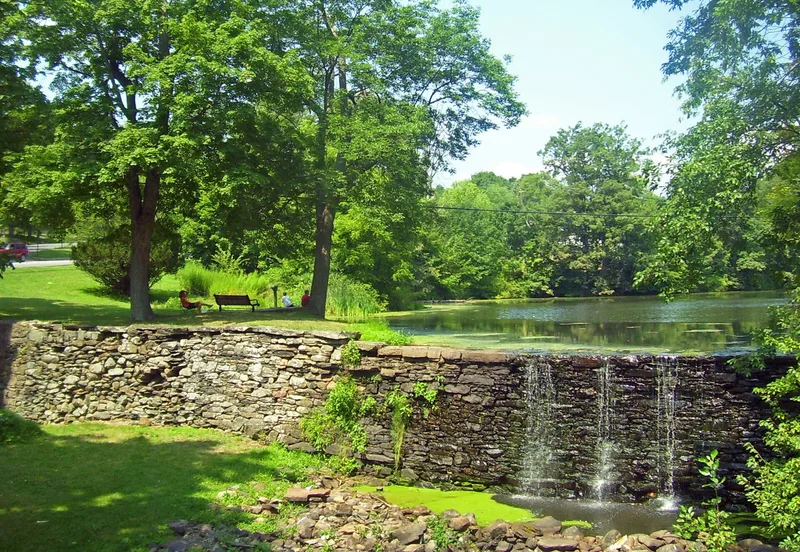
Monroe's historic core in Orange County, New York, is a district of about 81 acres centered where the Ramapo Creek crosses Stage Road. It began in 1741, when David Smith of Long Island dammed the creek and built a grist mill, creating the Mill Pond whose ruins still mark the first settlement. The district now holds roughly sixty contributing resources, including houses, churches, outbuildings, mill remains and the site of a 1907 race track. Buildings range from small eighteenth-century salt-box dwellings to Federal taverns and houses, Greek Revival homes, and Italianate and Queen Anne residences. The 1853 Presbyterian Church, a temple-front Greek Revival building, forms the visual focal point. Waterpower made the community a busy milling and commercial center for the surrounding township, and the Orange Turnpike, later Stage Road, linked it to regional travel. The area keeps a cohesive character, with many buildings retaining original form, even where modern siding now covers them.
Machine-generated summary. This summary was generated by a language model from the official nomination document and has not been reviewed line by line by an editor. It may contain errors. Check the source document before relying on any detail. Source: nomination document (PDF) · catalog entry. Generated October 2026 (model claude-sonnet-5-5, prompt v1.0-2026-10-29).
| Styles | Early Republic/Federal; Mid-19th Century/Greek Revival, Gothic Revival; Late Victorian/Italianate, Second Empire, Queen Anne |
|---|---|
| Areas of significance | Architecture |
| Acreage | 81 |
| Boundary source | NPS cultural-resource GIS polygon |
| Full listing page | Village of Monroe Historic District (property record) |
What listing means for this property
This is a historic district. Buildings within its boundary are either contributing (they add to the district's significance) or non-contributing. Owners of contributing income-producing buildings can claim the 20% federal rehabilitation tax credit; homeowners should look at state credits. National Register districts impose no design review by themselves; a local historic district ordinance, if one exists, does (the difference explained).
General information, not legal or tax advice. Rules change; confirm with your State Historic Preservation Office or a qualified adviser.