Vanderbilt Lane Historic District

Why it's listed
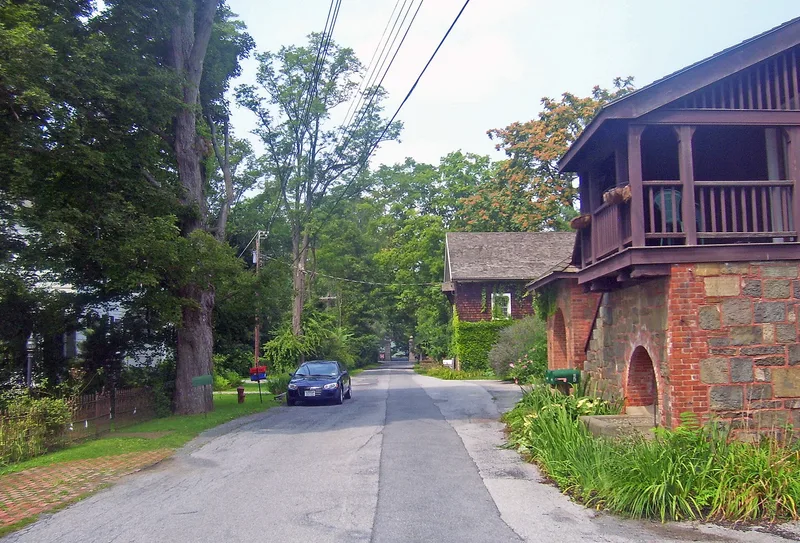
Vanderbilt Lane in Hyde Park preserves the working core of Frederick W. Vanderbilt's estate farm. The ten-acre district contains five contributing buildings, a stone well, and objects including a fieldstone wall, two decorative fire hydrants and a cast-iron fence. Buildings include a superintendent's house, a herdsman's house from about 1830, a stone creamery, a coach house moved to the site in 1905, and the remains of a large U-shaped barn complex. Vanderbilt bought the former Langdon estate in 1895, and in 1901 a contract for a new barn complex was awarded to Cregan and Collins. The Shingle style shaped the barn and superintendent's house, with fieldstone and brick surfaces. The creamery is described as the most architecturally distinctive building. The farm supplied butter, milk and cream shipped by rail to the family's New York City home. A fire later destroyed much of the barn complex. Few Hudson River estate farm buildings survive, which underlies the district's significance.
Machine-generated summary. This summary was generated by a language model from the official nomination document and has not been reviewed line by line by an editor. It may contain errors. Check the source document before relying on any detail. Source: nomination document (PDF) · catalog entry. Generated October 2026 (model claude-sonnet-5-5, prompt v1.0-2026-10-29).
| Period of significance | 1890-1901 |
|---|---|
| Styles | Federal, Shingle style |
| Areas of significance | Architecture |
| Acreage | 10 |
| Boundary source | NPS cultural-resource GIS polygon |
| Full listing page | Vanderbilt Lane Historic District (property record) |
What listing means for this property
This is a historic district. Buildings within its boundary are either contributing (they add to the district's significance) or non-contributing. Owners of contributing income-producing buildings can claim the 20% federal rehabilitation tax credit; homeowners should look at state credits. National Register districts impose no design review by themselves; a local historic district ordinance, if one exists, does (the difference explained).
General information, not legal or tax advice. Rules change; confirm with your State Historic Preservation Office or a qualified adviser.