Trapps Mountain Hamlet Historic District

Why it's listed
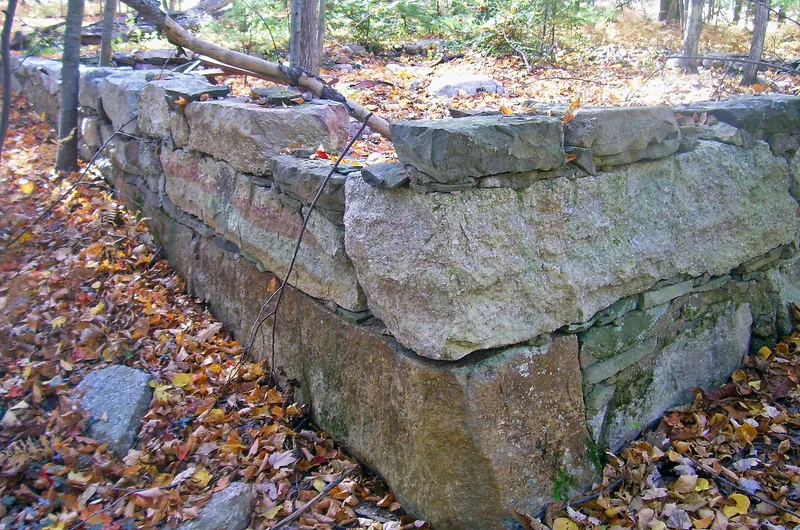
Trapps Mountain Hamlet is a mostly abandoned settlement on the Shawangunk Ridge in Ulster County, New York, beside a natural gap in the cliffs known as the Trapps. It grew from the late eighteenth century and declined by the 1940s, as a near-subsistence mountain community. Anecdotal and archaeological evidence suggests Native Americans displaced from the valleys below shared the ridge with European-American settlers into the late nineteenth century. The district includes a network of roads and trails, stone walls, six historic buildings, one in ruins, along with cellar holes, building sites, burial grounds and bridge abutments. Many dwellings used an unusual local framing method, called Shawangunk batten-plank, of thin vertical boards joined by heavy horizontal braces and lacking corner posts. Industrial remnants such as the Davis Mill site also survive. Because the Mohonk Preserve and Minnewaska State Park Preserve own most of the land, the remains can be studied and interpreted for the public.
Machine-generated summary. This summary was generated by a language model from the official nomination document and has not been reviewed line by line by an editor. It may contain errors. Check the source document before relying on any detail. Source: nomination document (PDF) · catalog entry. Generated October 2026 (model claude-sonnet-5-5, prompt v1.0-2026-10-29).
| Period of significance | Initial settlement to the 1950s |
|---|---|
| Styles | Vernacular Shawangunk batten-plank framing, plus log construction and standard light framing; no formal classification given |
| Areas of significance | Exploration/Settlement, Community Planning and Development, Historic - Non-Aboriginal |
| Acreage | 433 |
| Boundary source | NPS cultural-resource GIS polygon |
| Full listing page | Trapps Mountain Hamlet Historic District (property record) |
What listing means for this property
This is a historic district. Buildings within its boundary are either contributing (they add to the district's significance) or non-contributing. Owners of contributing income-producing buildings can claim the 20% federal rehabilitation tax credit; homeowners should look at state credits. National Register districts impose no design review by themselves; a local historic district ordinance, if one exists, does (the difference explained).
General information, not legal or tax advice. Rules change; confirm with your State Historic Preservation Office or a qualified adviser.