Tompkins Street Historic District

Why it's listed
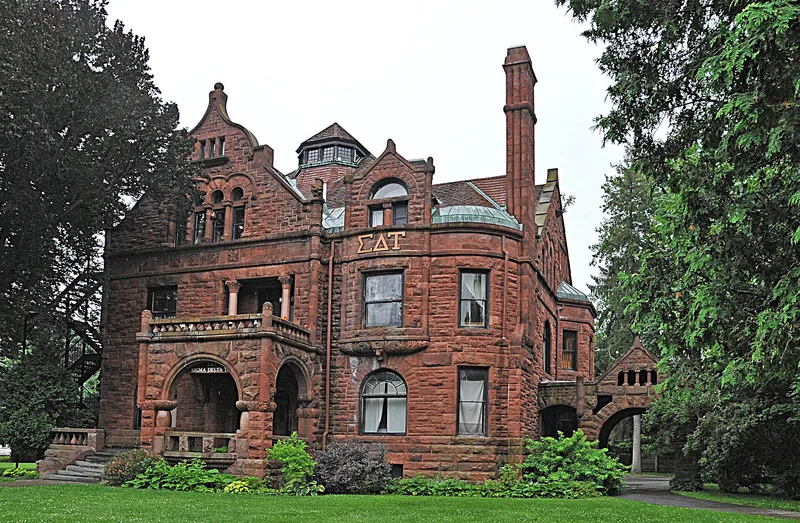
Tompkins Street in Cortland, New York, anchors a district of about 49 structures running from Main Street to the Cortland Rural Cemetery. Quiet residences line the street, ranging from simple frame houses to the mansions of leading families, in styles from Italian-inspired to shingle style. The oldest house, built in 1808 and rebuilt in 1916, dates to the organization of Cortland County. On Main Street, three-story brick commercial blocks from the later nineteenth century include mansard-roofed and flat-roofed examples. The district reflects Cortland's growth after the county seat was chosen in 1810. Early construction on the street came with the Randall merchant family, whose stores dominated local trade for decades. After the Civil War, banks and vehicle manufacturing brought wealthy businessmen, who replaced older houses with larger homes. Manufacturers of wire cloth, the Fitzgerald-Wickwire family, were among them. Together the buildings show the village's change from a rural settlement to an industrial center.
Machine-generated summary. This summary was generated by a language model from the official nomination document and has not been reviewed line by line by an editor. It may contain errors. Check the source document before relying on any detail. Source: nomination document (PDF) · catalog entry. Generated October 2026 (model claude-sonnet-5-5, prompt v1.0-2026-10-29).
| Styles | Wide variety of styles from the early 19th to the 20th century, including Italianate-inspired, shingle style, Victorian commercial vernacular, and colonial |
|---|---|
| Areas of significance | Community Planning and Development, Commerce |
| Acreage | 49.4 |
| Boundary source | NPS cultural-resource GIS polygon |
| Full listing page | Tompkins Street Historic District (property record) |
What listing means for this property
This is a historic district. Buildings within its boundary are either contributing (they add to the district's significance) or non-contributing. Owners of contributing income-producing buildings can claim the 20% federal rehabilitation tax credit; homeowners should look at state credits. National Register districts impose no design review by themselves; a local historic district ordinance, if one exists, does (the difference explained).
General information, not legal or tax advice. Rules change; confirm with your State Historic Preservation Office or a qualified adviser.