The Woodpile

Why it's listed
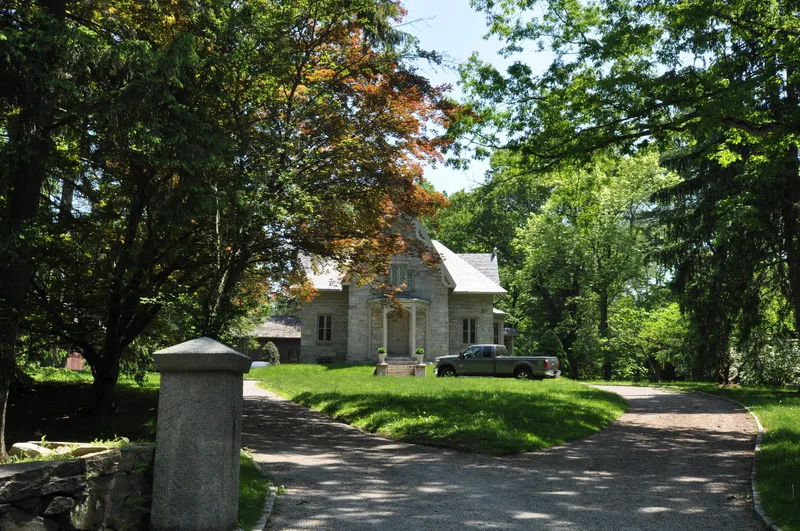
Near Mt. Kisco in the town of Bedford, a row of three houses faces west across Croton Lake Road toward a thirty-acre pastoral field known as School House Meadow. Built by brothers Henry, John and James Wood, the houses reflect the Wood family's association with the site since 1809. Brambleworth, finished in 1847 to a design by A.J. Davis, is a stone Gothic Revival cottage. Evergreen Lawn, completed in 1856, is a stuccoed brick Italian Villa. Braewold, completed in 1870 from drawings by Philadelphia architect Addison Hutton, is a stone Second Empire house with a coach house and a group of working farm buildings. Stone retaining walls along the road act as ha-has, hiding it from the houses and joining their lawns to the meadow. The 122-acre district was recognized for how its architecture and designed landscapes together show mid-nineteenth-century ideals of country living, with Braewold still operating as a farm.
Machine-generated summary. This summary was generated by a language model from the official nomination document and has not been reviewed line by line by an editor. It may contain errors. Check the source document before relying on any detail. Source: nomination document (PDF) · catalog entry. Generated October 2026 (model claude-sonnet-5-5, prompt v1.0-2026-10-29).
| Period of significance | Ends in 1870; the form gives 1870 as the end of the period (start date not legible in the provided text). |
|---|---|
| Styles | Gothic Revival, Italian Villa, Second Empire |
| Areas of significance | Landscape Architecture, Architecture |
| Acreage | 122 |
| Boundary source | NPS cultural-resource GIS polygon |
| Full listing page | The Woodpile (property record) |
What listing means for this property
This is a historic district. Buildings within its boundary are either contributing (they add to the district's significance) or non-contributing. Owners of contributing income-producing buildings can claim the 20% federal rehabilitation tax credit; homeowners should look at state credits. National Register districts impose no design review by themselves; a local historic district ordinance, if one exists, does (the difference explained).
General information, not legal or tax advice. Rules change; confirm with your State Historic Preservation Office or a qualified adviser.