Sunset Park Historic District

Why it's listed
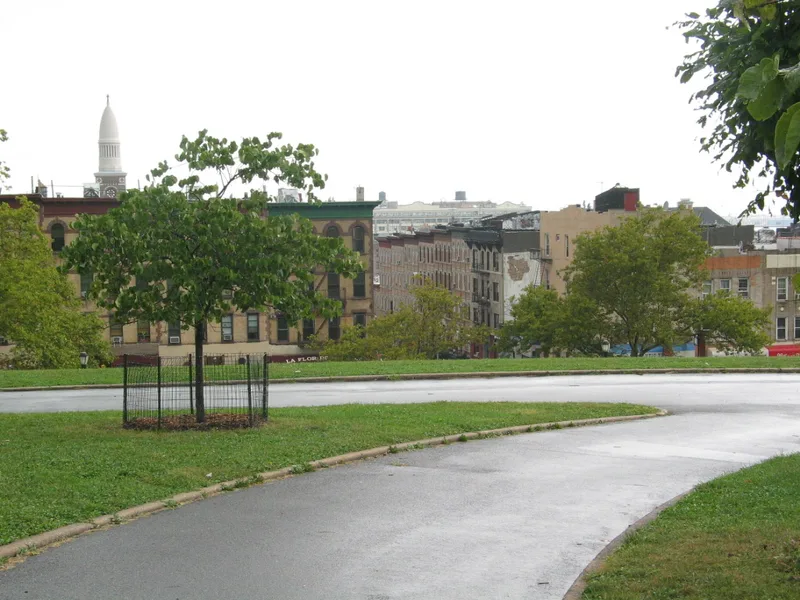
Sunset Park Historic District covers much of the Brooklyn neighborhood of Sunset Park, running up to twenty-seven blocks north to south and three blocks wide. It holds 3,237 contributing buildings across seventy-one blocks, plus Sunset Park itself. The area is mainly residential, with a low-rise scale of two-story row houses and three- to five-story apartment buildings, and mixed-use buildings with shops below and apartments above line the avenues, especially Fifth Avenue. Brick is the main facade material, with stone rows concentrated between Fourth and Fifth avenues. Building styles trace a progression from frame houses with Italianate and neo-Grec detail, through Queen Anne and Romanesque Revival forms of the 1890s, to the neo-Renaissance style that dominates the district. Many houses were built by speculative builders as two-family homes. Finnish cooperative apartments arranged around central courts add an unusual note. Churches, schools and banks supply the main institutional landmarks. Together the buildings create a cohesive neighborhood set apart from its surroundings.
Machine-generated summary. This summary was generated by a language model from the official nomination document and has not been reviewed line by line by an editor. It may contain errors. Check the source document before relying on any detail. Source: nomination document (PDF) · catalog entry. Generated October 2026 (model claude-sonnet-5-5, prompt v1.0-2026-10-29).
| Styles | Neo-Grec, Queen Anne, Romanesque Revival, neo-Renaissance |
|---|---|
| Areas of significance | Architecture |
| Acreage | 280 |
| Boundary source | NPS cultural-resource GIS polygon |
| Full listing page | Sunset Park Historic District (property record) |
What listing means for this property
This is a historic district. Buildings within its boundary are either contributing (they add to the district's significance) or non-contributing. Owners of contributing income-producing buildings can claim the 20% federal rehabilitation tax credit; homeowners should look at state credits. National Register districts impose no design review by themselves; a local historic district ordinance, if one exists, does (the difference explained).
General information, not legal or tax advice. Rules change; confirm with your State Historic Preservation Office or a qualified adviser.