St. Joseph's Seminary

Why it's listed
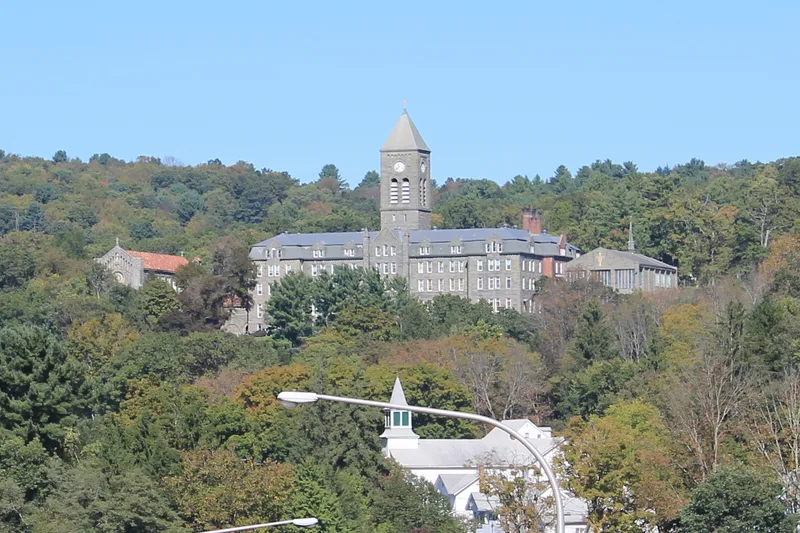
St. Joseph's Seminary is a campus of stone, brick and timber buildings on a hillside overlooking the Delaware River and the hamlet of Callicoon. Franciscan friars established the minor seminary in 1901 in a former boarding house. The main building, a four-story U-shaped bluestone structure with a 190-foot bell tower, was built between 1901 and 1910. Holy Cross Chapel followed in 1927, designed by Comes, Perry & McMullen in the Romanesque style, with a rose window and an ornate altar canopy that remains. A large dairy barn, small outbuildings, a 1930 brick gymnasium, a campus pond and a curving approach drive complete the district. The buildings are the only large native stone structures in the river valley, and the tower is visible for miles. Franciscans from the seminary also served as priests in many nearby parishes. The Department of Labor bought the property in 1979 and operates a job training center there. The district is recognized for its architecture and its setting.
Machine-generated summary. This summary was generated by a language model from the official nomination document and has not been reviewed line by line by an editor. It may contain errors. Check the source document before relying on any detail. Source: nomination document (PDF) · catalog entry. Generated October 2026 (model claude-sonnet-5-5, prompt v1.0-2026-10-29).
| Period of significance | 1901-1942 |
|---|---|
| Styles | Late Victorian / Romanesque Revival |
| Areas of significance | Architecture |
| Acreage | 15 |
| Boundary source | NPS cultural-resource GIS polygon |
| Full listing page | St. Joseph's Seminary (property record) |
What listing means for this property
This is a historic district. Buildings within its boundary are either contributing (they add to the district's significance) or non-contributing. Owners of contributing income-producing buildings can claim the 20% federal rehabilitation tax credit; homeowners should look at state credits. National Register districts impose no design review by themselves; a local historic district ordinance, if one exists, does (the difference explained).
General information, not legal or tax advice. Rules change; confirm with your State Historic Preservation Office or a qualified adviser.