Soho Historic District

Why it's listed
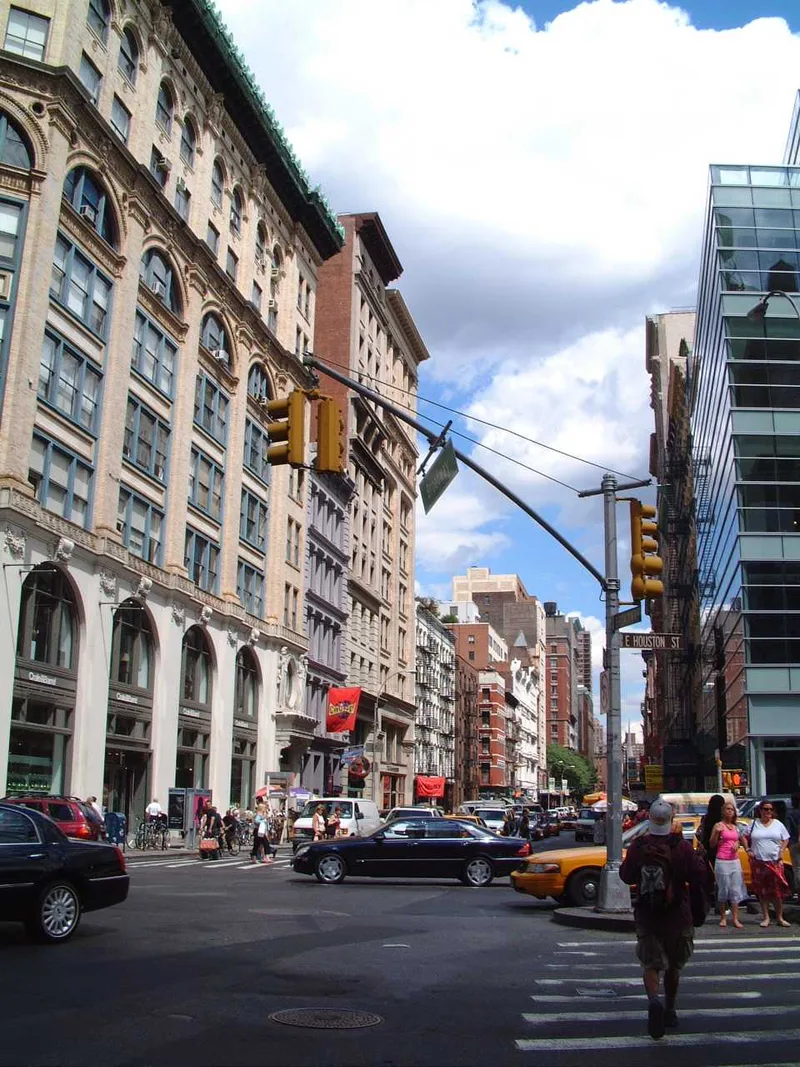
SoHo is a compact district of about twenty-eight blocks in lower Manhattan, bounded roughly by Houston Street, Crosby Street, Canal Street and West Broadway. Its warehouses and commercial buildings, mostly five or six stories, were built largely between 1860 and 1890 and form the largest concentration of cast-iron architecture in the world. Cast iron was used mainly for facades, which imitated stone in Renaissance Revival, Second Empire and neo-Grec styles. Notable works include buildings by Griffith Thomas, J.F. Duckworth, Richard Morris Hunt and Ernest Flagg, whose Little Singer Building marks the shift toward steel-frame skyscrapers. The buildings reflect the commercial prosperity of New York as textile and mercantile firms moved north. The area was earlier farmland, including land granted to freed slaves in the Dutch period, and is noted as the site of the first free Black settlement on Manhattan. Intrusions such as garages, service stations and parking lots are few.
Machine-generated summary. This summary was generated by a language model from the official nomination document and has not been reviewed line by line by an editor. It may contain errors. Check the source document before relying on any detail. Source: nomination document (PDF) · catalog entry. Generated October 2026 (model claude-sonnet-5-5, prompt v1.0-2026-10-29).
| Period of significance | 1800-1899 |
|---|---|
| Styles | Cast-iron commercial architecture imitating Renaissance Revival, French Second Empire and neo-Grec styles |
| Areas of significance | Commerce, Architecture |
| Acreage | 73 |
| Boundary source | NPS cultural-resource GIS polygon |
| Full listing page | Soho Historic District (property record) |
What listing means for this property
This is a historic district. Buildings within its boundary are either contributing (they add to the district's significance) or non-contributing. Owners of contributing income-producing buildings can claim the 20% federal rehabilitation tax credit; homeowners should look at state credits. National Register districts impose no design review by themselves; a local historic district ordinance, if one exists, does (the difference explained).
General information, not legal or tax advice. Rules change; confirm with your State Historic Preservation Office or a qualified adviser.