Sniffen Court Historic District

The National Park Service has not published a boundary polygon for this district; the map shows the listed properties inside it and the district's reference point.
Why it's listed
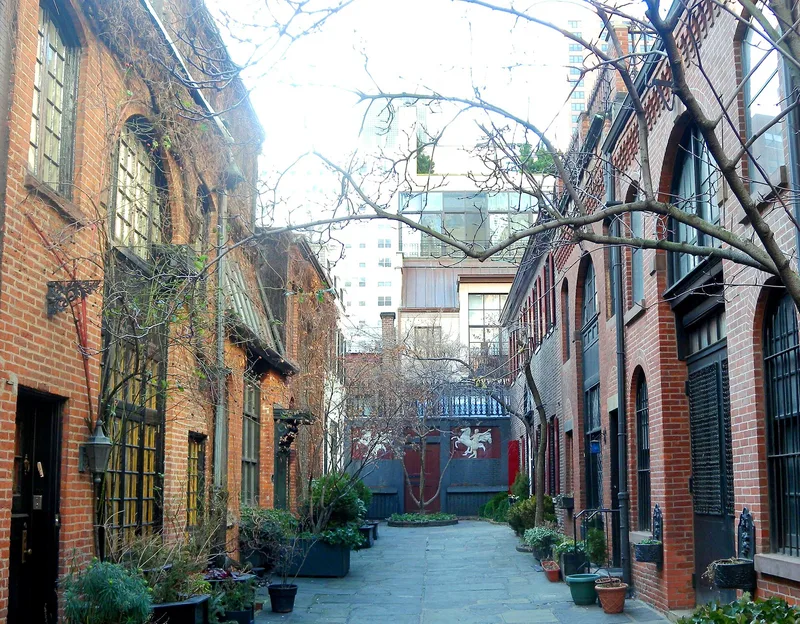
Sniffen Court is a narrow, blind alley off East 36th Street, between Lexington and Third Avenues in Manhattan, lined with ten two-story brick buildings. They began in the 1860s as stables for families living in the Murray Hill district. John Sniffen, a local builder, was retained by four developers who took four standard 25-by-100-foot lots and rearranged them into ten lots sharing access to an alley. The buildings follow the vernacular methods of local masons and carpenters. Each originally had a wide rounded carriage arch with a limestone keystone. Some arches have since been filled with brick, and doorways and windows vary. When carriages became less common, the stables were made over into homes. Later uses included a small amateur theatre and an architect's office. The south end of the court is closed by the wall of sculptor Malvina Hoffman's studio, decorated with plaques of Greek horsemen. The district was valued for its well-preserved exteriors, its charm and its picture of nineteenth-century city life.
Machine-generated summary. This summary was generated by a language model from the official nomination document and has not been reviewed line by line by an editor. It may contain errors. Check the source document before relying on any detail. Source: nomination document (PDF) · catalog entry. Generated October 2026 (model claude-sonnet-5-5, prompt v1.0-2026-10-29).
| Period of significance | 1860s |
|---|---|
| Styles | Vernacular design and construction used by local masons and carpenters |
| Areas of significance | Architecture |
| Acreage | 0.9 |
| Boundary source | not published |
| Full listing page | Sniffen Court Historic District (property record) |
What listing means for this property
This is a historic district. Buildings within its boundary are either contributing (they add to the district's significance) or non-contributing. Owners of contributing income-producing buildings can claim the 20% federal rehabilitation tax credit; homeowners should look at state credits. National Register districts impose no design review by themselves; a local historic district ordinance, if one exists, does (the difference explained).
General information, not legal or tax advice. Rules change; confirm with your State Historic Preservation Office or a qualified adviser.