Sheldon-Owens Farm

Why it's listed
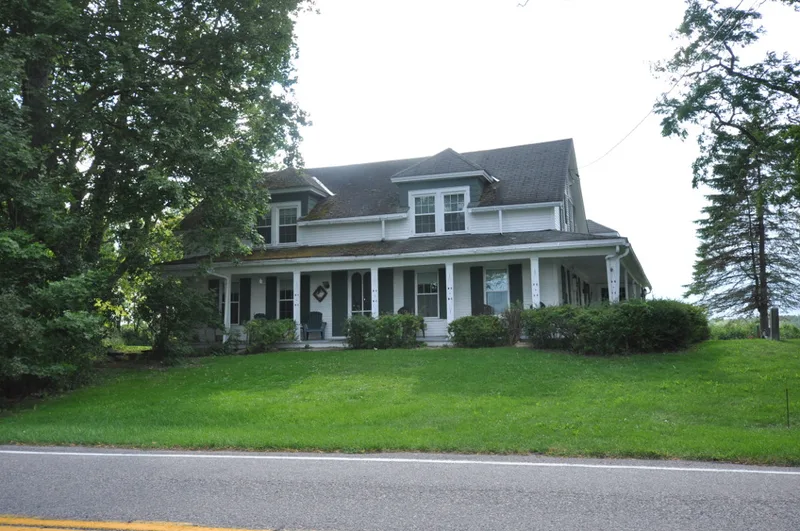
Sheldon-Owens Farm occupies about 251 acres in the southeast corner of Willsboro, Essex County, New York. Joseph Sheldon bought the first lot in 1784, and the farm grew through the nineteenth century before the Owens family acquired it in 1903 and expanded it again. Buildings cluster along Route 22, including an English-type barn from the late eighteenth century, later barns, a granary, a brick smokehouse, a sugar house, a well house with a windmill, and a farmhouse built about 1855 and remodeled around 1910-20. Behind them lie crop fields, pastures, a cow lane, a mature apple orchard and a woodlot, an arrangement that follows the New England four-field system. Dairy products, wool and apples remained staples of the farm economy into the mid-twentieth century. The farm is notable for the continuity of its layout and the survival of its buildings and landscape across more than two centuries, with little major change between 1950 and 1985.
Machine-generated summary. This summary was generated by a language model from the official nomination document and has not been reviewed line by line by an editor. It may contain errors. Check the source document before relying on any detail. Source: nomination document (PDF) · catalog entry. Generated October 2026 (model claude-sonnet-5-5, prompt v1.0-2026-10-29).
| Period of significance | 1784-1945 |
|---|---|
| Styles | No Style |
| Areas of significance | Agriculture, Exploration/Settlement, Architecture |
| Acreage | 251 |
| Boundary source | NPS cultural-resource GIS polygon |
| Full listing page | Sheldon-Owens Farm (property record) |
What listing means for this property
This is a historic district. Buildings within its boundary are either contributing (they add to the district's significance) or non-contributing. Owners of contributing income-producing buildings can claim the 20% federal rehabilitation tax credit; homeowners should look at state credits. National Register districts impose no design review by themselves; a local historic district ordinance, if one exists, does (the difference explained).
General information, not legal or tax advice. Rules change; confirm with your State Historic Preservation Office or a qualified adviser.