Senator Street Historic District

Why it's listed
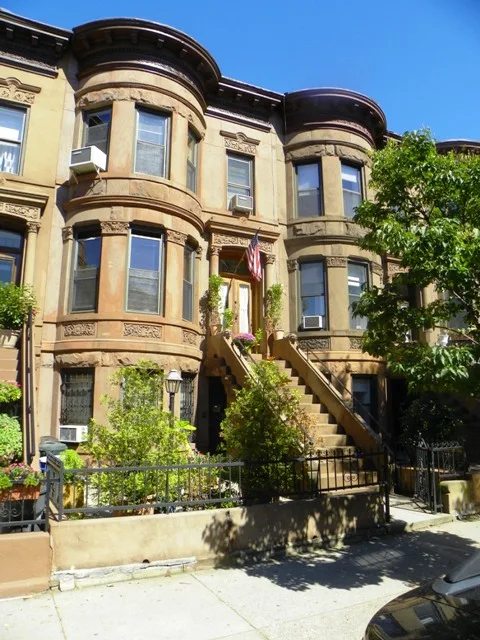
Senator Street between Third and Fourth Avenues in Bay Ridge, Brooklyn, holds a unified block of 38 three-story, bow-front brownstone row houses, along with three garages. Fred W. Eisenla of the firm Eisenla & Carlson designed the houses in the neo-Renaissance style, and they were built as speculative housing between 1906 and 1912 on land once owned by industrialist Joseph Wild and subdivided after his wife's death in 1898. At first glance the houses appear identical, but nearly every carved element, including capitals, rosettes and panels beneath the parlor windows, differs from house to house. Only the lion's head on each stoop railing and the top rosette over each entry are the same throughout. The block is the only one in Bay Ridge with brownstone rows on both sides of the street. It was recognized for its architecture and for what it shows about speculative development in early twentieth-century Brooklyn. Its period of significance runs from 1906 to 1920.
Machine-generated summary. This summary was generated by a language model from the official nomination document and has not been reviewed line by line by an editor. It may contain errors. Check the source document before relying on any detail. Source: nomination document (PDF) · catalog entry. Generated October 2026 (model claude-sonnet-5-5, prompt v1.0-2026-10-29).
| Period of significance | 1906-1920 |
|---|---|
| Styles | Late 19th & 20th Century Revivals/Neo-Renaissance |
| Areas of significance | Architecture, Community Planning and Development |
| Acreage | 2.5 |
| Boundary source | NPS cultural-resource GIS polygon |
| Full listing page | Senator Street Historic District (property record) |
What listing means for this property
This is a historic district. Buildings within its boundary are either contributing (they add to the district's significance) or non-contributing. Owners of contributing income-producing buildings can claim the 20% federal rehabilitation tax credit; homeowners should look at state credits. National Register districts impose no design review by themselves; a local historic district ordinance, if one exists, does (the difference explained).
General information, not legal or tax advice. Rules change; confirm with your State Historic Preservation Office or a qualified adviser.