Rokeby
Why it's listed
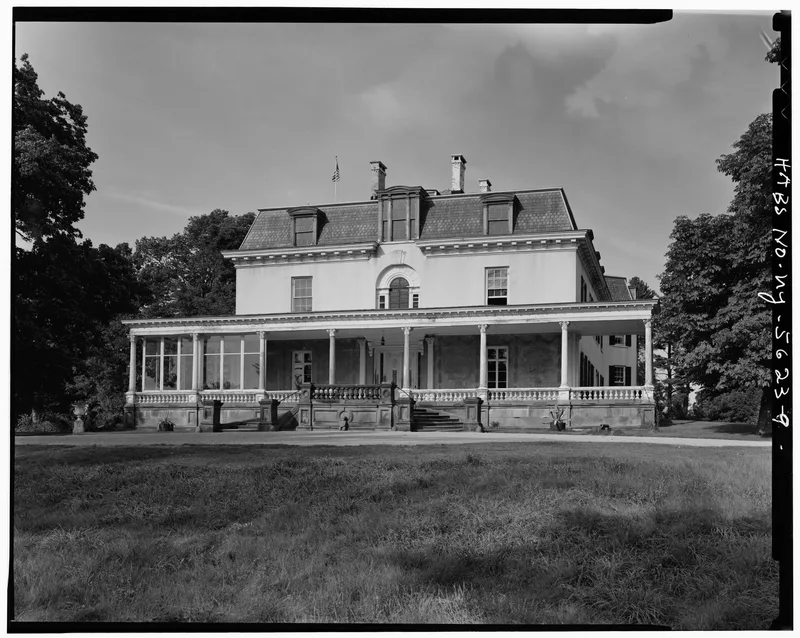
Rokeby is a Hudson River country estate south of Barrytown, built in 1811-1815 as the third residence John Armstrong erected on land inherited by his wife, Alida Livingston. Armstrong, a Revolutionary War officer, diplomat and Secretary of War, built a fieldstone house with a central hall and a Palladian window above the entrance. Around 1816 he added a northern wing. Mid-century, William Backhouse and Margaret Astor enlarged the house to 48 rooms with a brick library tower, a north wing and a third story. Stanford White redesigned parts of the interior and porch in 1895. The grounds were landscaped around 1840 and again in 1911 by Olmsted Brothers. Barns, a gatehouse, a gardener's cottage and a greenhouse surround the house. Margaret Livingston Chanler later ran a dairy farm here. The estate survives with little change since about 1900 and is still in a rural setting.
Machine-generated summary. This summary was generated by a language model from the official nomination document and has not been reviewed line by line by an editor. It may contain errors. Check the source document before relying on any detail. Source: nomination document (PDF) · catalog entry. Generated October 2026 (model claude-sonnet-5-5, prompt v1.0-2026-10-29).
| Period of significance | 19th Century (specific date 1811-1815) |
|---|---|
| Areas of significance | Architecture |
| Acreage | 437 |
| Boundary source | NPS cultural-resource GIS polygon |
| Full listing page | Rokeby (property record) |
What listing means for this property
This is a historic district. Buildings within its boundary are either contributing (they add to the district's significance) or non-contributing. Owners of contributing income-producing buildings can claim the 20% federal rehabilitation tax credit; homeowners should look at state credits. National Register districts impose no design review by themselves; a local historic district ordinance, if one exists, does (the difference explained).
General information, not legal or tax advice. Rules change; confirm with your State Historic Preservation Office or a qualified adviser.