Rochelle Park-Rochelle Heights Historic District

Why it's listed
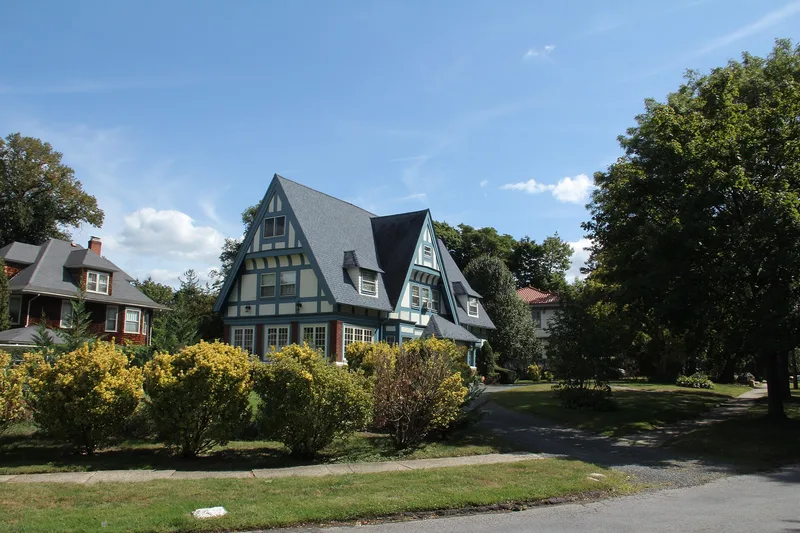
Rochelle Park and Rochelle Heights are two adjoining planned residential parks north of downtown New Rochelle, New York. Rochelle Park began when the Manhattan Life Insurance Company acquired Wakeman Hull's 70-acre estate. Its 1886 plan, by landscape engineer Nathan F. Barrett, set a wide diagonal boulevard against a winding road called The Serpentine, with a large green known as The Lawn near the entrance gateway. Lots were priced by location, so buyers with different budgets could build there. Rochelle Heights followed about twenty years later on the former farm of George G. Sickles. Together the parks hold roughly 555 contributing resources, mostly houses, along with garages, landscaped spaces and other features. Styles include Queen Anne, Shingle Style, Colonial Revival and Tudor Revival. An 1889 advertisement links two Manhattan Avenue houses to McKim, Mead & White. Interstate 95 construction in the 1960s removed much of the south side of Manhattan Avenue, but the original landscape plan remains largely intact.
Machine-generated summary. This summary was generated by a language model from the official nomination document and has not been reviewed line by line by an editor. It may contain errors. Check the source document before relying on any detail. Source: nomination document (PDF) · catalog entry. Generated October 2026 (model claude-sonnet-5-5, prompt v1.0-2026-10-29).
| Styles | Late Victorian (Queen Anne, Shingle Style); Late 19th & 20th Century Revivals (Colonial Revival, Tudor Revival) |
|---|---|
| Areas of significance | Architecture, Community Planning and Development, Landscape Architecture |
| Acreage | 180 |
| Boundary source | NPS cultural-resource GIS polygon |
| Full listing page | Rochelle Park-Rochelle Heights Historic District (property record) |
What listing means for this property
This is a historic district. Buildings within its boundary are either contributing (they add to the district's significance) or non-contributing. Owners of contributing income-producing buildings can claim the 20% federal rehabilitation tax credit; homeowners should look at state credits. National Register districts impose no design review by themselves; a local historic district ordinance, if one exists, does (the difference explained).
General information, not legal or tax advice. Rules change; confirm with your State Historic Preservation Office or a qualified adviser.