Riders Mills Historic District

Why it's listed
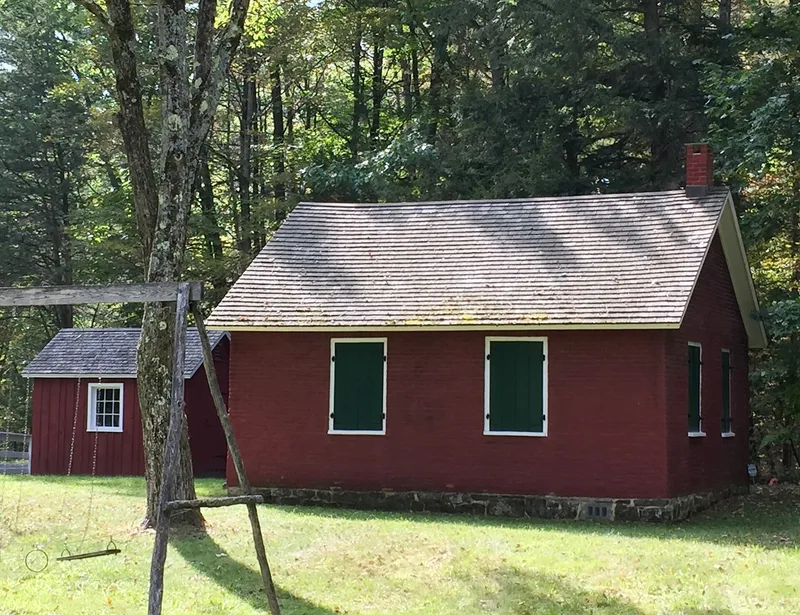
Riders Mills is a small hamlet in the Town of Chatham, Columbia County, New York, set along Kinderhook Creek where water power once drove several mills. Eseck Mosher developed the early dam and mills in the late eighteenth century, and Jonathan Rider bought land there in 1802 and expanded the operations. The Rider family dominated the community until 1948. The mills, including saw, grist, fulling and carding operations, were swept away in a flood in 1869 and were not rebuilt, and the hamlet turned to farming. What remains is a group of houses in late Colonial, Greek Revival and Italianate styles, a brick one-room schoolhouse, a former saloon, a blacksmith's site, and many nineteenth century barns. Eight archeological sites, including mill foundations, a stone quarry and a covered bridge abutment, add to the district. It is recognized for its milling history, its intact nineteenth century architecture and its archeological potential.
Machine-generated summary. This summary was generated by a language model from the official nomination document and has not been reviewed line by line by an editor. It may contain errors. Check the source document before relying on any detail. Source: nomination document (PDF) · catalog entry. Generated October 2026 (model claude-sonnet-5-5, prompt v1.0-2026-10-29).
| Period of significance | ca. 1800-1948 |
|---|---|
| Styles | Colonial (late 18th century) Georgian; Greek Revival; Late Victorian Italianate |
| Areas of significance | Agriculture, Exploration/Settlement, Architecture, Industry, Historic - Non-Aboriginal, Community Planning and Development, Education |
| Acreage | 200 |
| Boundary source | NPS cultural-resource GIS polygon |
| Full listing page | Riders Mills Historic District (property record) |
What listing means for this property
This is a historic district. Buildings within its boundary are either contributing (they add to the district's significance) or non-contributing. Owners of contributing income-producing buildings can claim the 20% federal rehabilitation tax credit; homeowners should look at state credits. National Register districts impose no design review by themselves; a local historic district ordinance, if one exists, does (the difference explained).
General information, not legal or tax advice. Rules change; confirm with your State Historic Preservation Office or a qualified adviser.