Residences at 5-15 West 54th Street

The National Park Service has not published a boundary polygon for this district; the map shows the listed properties inside it and the district's reference point.
Why it's listed
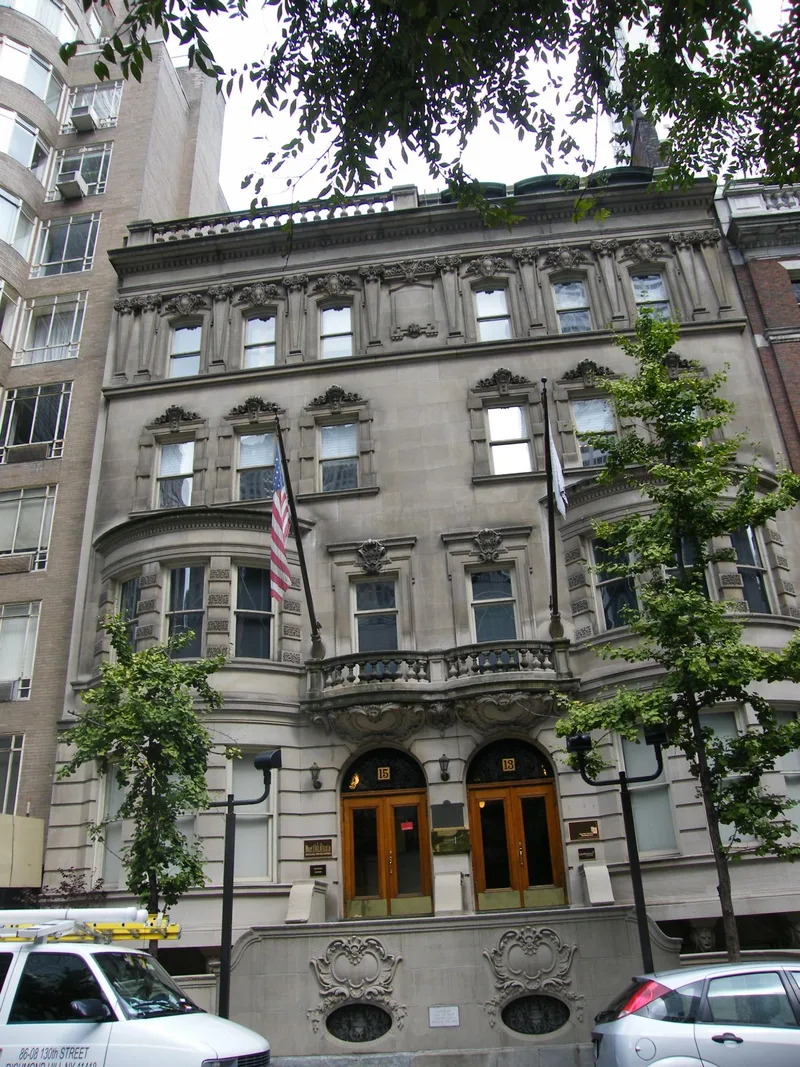
Five grand townhouses stand together on the north side of West 54th Street, just west of Fifth Avenue in midtown Manhattan. Built between 1896 and 1900 on land once occupied by St. Luke's Hospital, they were designed by four prominent architects or firms: McKim, Mead & White, R.H. Robertson, Henry Hardenbergh and John Duncan. The group includes a neo-Italian Renaissance house for Dr. Moses Allen Starr, a Beaux-Arts house for banker Philip Lehman, a Colonial Revival double house for James J. Goodwin, and a mirrored pair at Nos. 13 and 15. Although each design differs, the row is unified by similar height, massing, masonry construction, mansard roofs and classical details. The houses are significant as a rare surviving enclave from the brief period when wealthy families built single-family homes south of 59th Street, and for their exceptional integrity. Residents included the Lehmans, John D. Rockefeller, Jr. and Nelson Rockefeller, and the buildings remained residences into the 1970s.
Machine-generated summary. This summary was generated by a language model from the official nomination document and has not been reviewed line by line by an editor. It may contain errors. Check the source document before relying on any detail. Source: nomination document (PDF) · catalog entry. Generated October 2026 (model claude-sonnet-5-5, prompt v1.0-2026-10-29).
| Period of significance | 1896-1900 |
|---|---|
| Styles | Late 19th and 20th century revivals: Beaux Arts, Colonial Revival, Italian Renaissance, Classical Revival |
| Areas of significance | Architecture |
| Acreage | 0.9 |
| Boundary source | not published |
| Full listing page | Residences at 5-15 West 54th Street (property record) |
What listing means for this property
This is a historic district. Buildings within its boundary are either contributing (they add to the district's significance) or non-contributing. Owners of contributing income-producing buildings can claim the 20% federal rehabilitation tax credit; homeowners should look at state credits. National Register districts impose no design review by themselves; a local historic district ordinance, if one exists, does (the difference explained).
General information, not legal or tax advice. Rules change; confirm with your State Historic Preservation Office or a qualified adviser.