Pulaski Village Historic District

Why it's listed
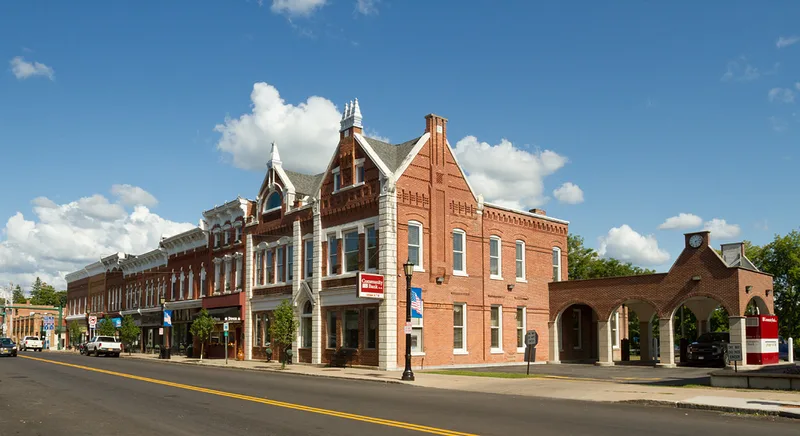
Pulaski Village Historic District preserves the residential and commercial heart of a small Oswego County village settled in 1804. The rectangular district runs three blocks by two and follows the militia drill ground surveyed in 1837, with parks at the north and south ends and a commercial center between them. It holds thirty-nine contributing elements, including a courthouse, two churches, seven houses and twenty-six commercial buildings. A fire in 1881 destroyed much of the business area, and merchants rebuilt within a year, mostly in brick Italianate style. Later buildings followed the same character. Architect Zina D. Stevens designed the 1859 Greek Revival courthouse, which encases an earlier 1819 building. Archimedes Russell designed the Pulaski National Bank and the Masonic Temple, and Milo Folley designed the Art Deco Kallet Theater of 1938. Pulaski was the seat of government for eastern Oswego County and a center for farming and lumbering, and its intact streetscape reflects that history.
Machine-generated summary. This summary was generated by a language model from the official nomination document and has not been reviewed line by line by an editor. It may contain errors. Check the source document before relying on any detail. Source: nomination document (PDF) · catalog entry. Generated October 2026 (model claude-sonnet-5-5, prompt v1.0-2026-10-29).
| Period of significance | 1819-1938 |
|---|---|
| Styles | Italianate predominant, with Federal, Greek Revival, Romanesque Revival, Queen Anne and Art Deco examples |
| Areas of significance | Architecture |
| Acreage | 11 |
| Boundary source | NPS cultural-resource GIS polygon |
| Full listing page | Pulaski Village Historic District (property record) |
What listing means for this property
This is a historic district. Buildings within its boundary are either contributing (they add to the district's significance) or non-contributing. Owners of contributing income-producing buildings can claim the 20% federal rehabilitation tax credit; homeowners should look at state credits. National Register districts impose no design review by themselves; a local historic district ordinance, if one exists, does (the difference explained).
General information, not legal or tax advice. Rules change; confirm with your State Historic Preservation Office or a qualified adviser.