Pratt Institute Historic District

The National Park Service has not published a boundary polygon for this district; the map shows the listed properties inside it and the district's reference point.
Why it's listed
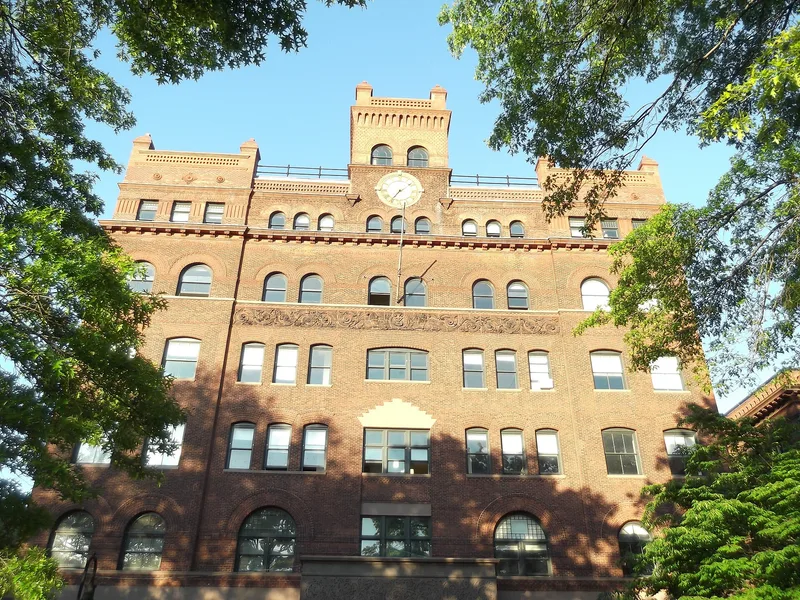
Pratt Institute's historic core in Brooklyn is a group of 36 buildings set among city streets rather than on a planned campus. Nine were built as academic buildings between 1885 and 1929: Main Building, South Hall, East Building, the Old Gym, the Library, Memorial Hall and the three-part East Quadrangle. Twenty-seven brick row houses, built by the Pratts in 1907, complete the district. The earliest buildings use Romanesque Revival design with brick, stone and terra-cotta detail, while later ones, such as the East Quadrangle, show Renaissance influence. Several early structures were built plainly so they could be turned into factories if the institute failed. Urban renewal in the 1950s removed neighboring row houses and closed streets, which altered the surroundings, but no Pratt-related buildings were lost. The library grounds and the quadrangle's open space survive. The boundary was drawn to include the buildings where the institute itself developed.
Machine-generated summary. This summary was generated by a language model from the official nomination document and has not been reviewed line by line by an editor. It may contain errors. Check the source document before relying on any detail. Source: nomination document (PDF) · catalog entry. Generated October 2026 (model claude-sonnet-5-5, prompt v1.0-2026-10-29).
| Styles | Late Victorian/Romanesque; Renaissance; Late Nineteenth and Twentieth Century Revivals |
|---|---|
| Areas of significance | Education, Architecture |
| Acreage | 9 |
| Boundary source | not published |
| Full listing page | Pratt Institute Historic District (property record) |
What listing means for this property
This is a historic district. Buildings within its boundary are either contributing (they add to the district's significance) or non-contributing. Owners of contributing income-producing buildings can claim the 20% federal rehabilitation tax credit; homeowners should look at state credits. National Register districts impose no design review by themselves; a local historic district ordinance, if one exists, does (the difference explained).
General information, not legal or tax advice. Rules change; confirm with your State Historic Preservation Office or a qualified adviser.