Plattsburgh Bay

Why it's listed
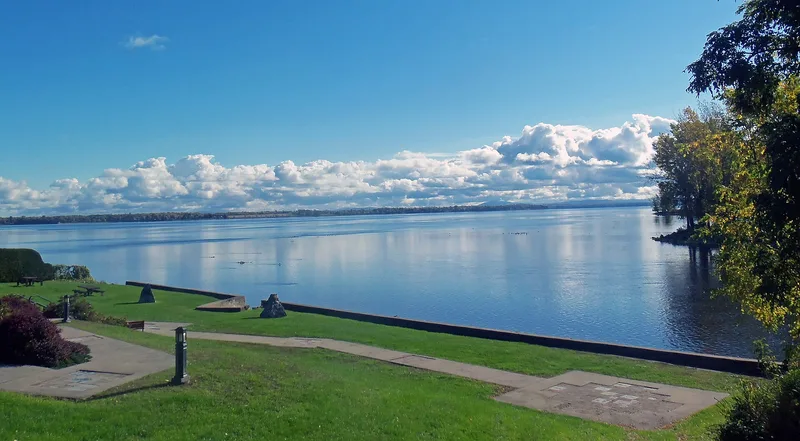
Plattsburgh Bay, also called Cumberland Bay, is the stretch of Lake Champlain between Cumberland Head and the mainland at Plattsburgh, New York. Its nominated area covers roughly 2,270 acres of water, along with two separate land parcels: the Kent-Delord House and Fort Brown. On September 11, 1814, Commodore Thomas Macdonough's American fleet, anchored in the confined waters of the bay, defeated a British squadron in a fight lasting about two and a half hours. With the British fleet destroyed, Governor General Prevost's army of more than 11,000 regulars withdrew to Canada. The result gave the Americans control of Lake Champlain and ended British hopes of gaining territory along the Canadian frontier. The city has grown over most of the land fighting sites, but the bay keeps its historic appearance. The Kent-Delord House, built in 1797, served as British officers' quarters, and the earthwork remains of Fort Brown mark the American defensive line. A 135-foot limestone obelisk, the Macdonough Memorial, overlooks the bay.
Machine-generated summary. This summary was generated by a language model from the official nomination document and has not been reviewed line by line by an editor. It may contain errors. Check the source document before relying on any detail. Source: nomination document (PDF) · catalog entry. Generated October 2026 (model claude-sonnet-5-5, prompt v1.0-2026-10-29).
| Period of significance | September 11, 1814 |
|---|---|
| Areas of significance | Historic - Non-Aboriginal, Military |
| Acreage | 7025 |
| Boundary source | NPS cultural-resource GIS polygon |
| Full listing page | Plattsburgh Bay (property record) |
What listing means for this property
This is a historic district. Buildings within its boundary are either contributing (they add to the district's significance) or non-contributing. Owners of contributing income-producing buildings can claim the 20% federal rehabilitation tax credit; homeowners should look at state credits. National Register districts impose no design review by themselves; a local historic district ordinance, if one exists, does (the difference explained).
General information, not legal or tax advice. Rules change; confirm with your State Historic Preservation Office or a qualified adviser.