Pastures Historic District

Why it's listed
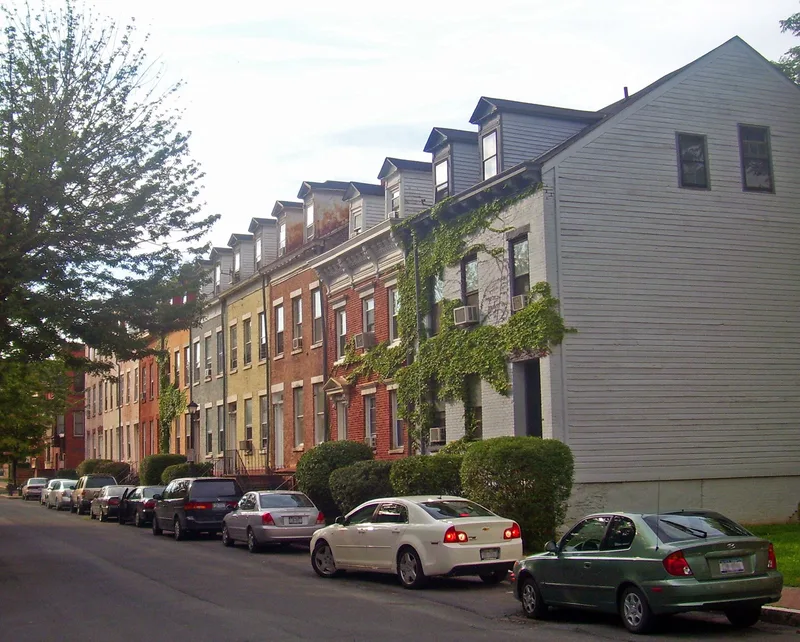
Thirteen blocks in Albany's South End make up this district of about 17 acres, laid out on land the Dutch founders set aside as a communal pasture. The city deeded it to the Dutch Reformed Church in 1687, and the church later divided it into lots after the Revolutionary War. More than three quarters of the surviving houses date from 1815 to 1855. They are mostly two- and three-story brick rowhouses with high basements, first in late Federal style and then in Greek Revival. Merchants, speculators and carpenter-builders erected them, and builders often kept workshops on their lots. Wealthy businessmen, craftsmen and free black residents lived in the same neighborhood. Later additions include School 15, built in the 1870s, and the Beth El Jacob Synagogue of 1907 and St. John's Church of 1903 to 1908. The nomination values the district for its uniform red brick streetscapes, its modest scale and its mix of homes, shops and churches. It notes that decline set in after the First World War.
Machine-generated summary. This summary was generated by a language model from the official nomination document and has not been reviewed line by line by an editor. It may contain errors. Check the source document before relying on any detail. Source: nomination document (PDF) · catalog entry. Generated October 2026 (model claude-sonnet-5-5, prompt v1.0-2026-10-29).
| Styles | Late Federal and Greek Revival rowhouses, with later Victorian modifications |
|---|---|
| Areas of significance | Architecture, Social History |
| Acreage | 17 |
| Boundary source | NPS cultural-resource GIS polygon |
| Full listing page | Pastures Historic District (property record) |
What listing means for this property
This is a historic district. Buildings within its boundary are either contributing (they add to the district's significance) or non-contributing. Owners of contributing income-producing buildings can claim the 20% federal rehabilitation tax credit; homeowners should look at state credits. National Register districts impose no design review by themselves; a local historic district ordinance, if one exists, does (the difference explained).
General information, not legal or tax advice. Rules change; confirm with your State Historic Preservation Office or a qualified adviser.