Parkway Village

Why it's listed
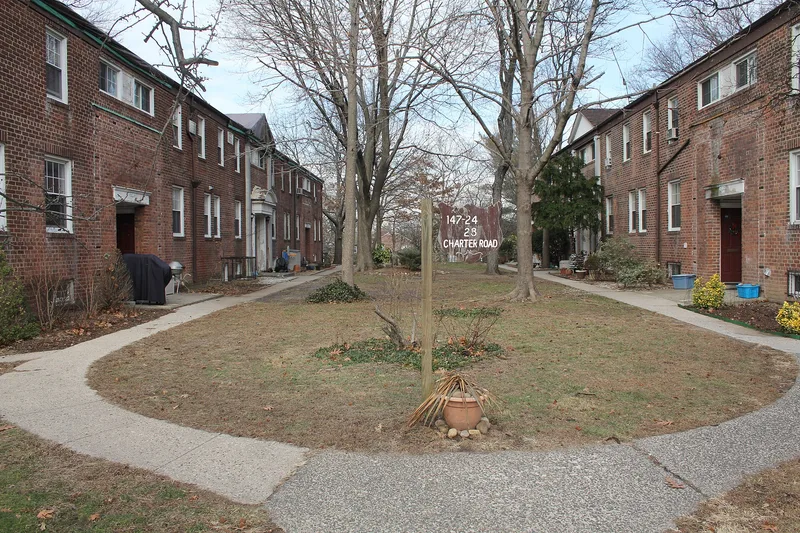
Parkway Village is a 35-acre residential complex in Queens, built in 1946-47 to house the international staff of the newly formed United Nations. Leonard Schultze & Associates designed it, drawing on experience with planned garden-apartment communities such as Parkfairfax in Virginia, and Clarence C. Combs created the landscape plan. Two internal roads, Charter Road and Village Road, link three main entrances, and buildings are grouped around courtyards and green spaces, with only 16 percent of the land covered by structures. The 109 buildings hold 685 mostly residential units. They are framed in concrete block, faced in red brick, and finished with clay tile roofs and neo-Georgian trim suggesting 18th-century colonial models. The buildings come in nine basic shapes with eighteen variants, mainly in entrance detailing. Five pairs of brick gateposts mark the entrances. Residents have included Ralph Bunche and Roy Wilkins. The plan, buildings and gateposts are the contributing elements of the district.
Machine-generated summary. This summary was generated by a language model from the official nomination document and has not been reviewed line by line by an editor. It may contain errors. Check the source document before relying on any detail. Source: nomination document (PDF) · catalog entry. Generated October 2026 (model claude-sonnet-5-5, prompt v1.0-2026-10-29).
| Styles | Late 19th and Early 20th Century Revivals / Colonial Revival (neo-Georgian) |
|---|---|
| Areas of significance | Architecture, Landscape Architecture, Politics/Government |
| Acreage | 36.5 |
| Boundary source | NPS cultural-resource GIS polygon |
| Full listing page | Parkway Village (property record) |
What listing means for this property
This is a historic district. Buildings within its boundary are either contributing (they add to the district's significance) or non-contributing. Owners of contributing income-producing buildings can claim the 20% federal rehabilitation tax credit; homeowners should look at state credits. National Register districts impose no design review by themselves; a local historic district ordinance, if one exists, does (the difference explained).
General information, not legal or tax advice. Rules change; confirm with your State Historic Preservation Office or a qualified adviser.