Onondaga Park

Why it's listed
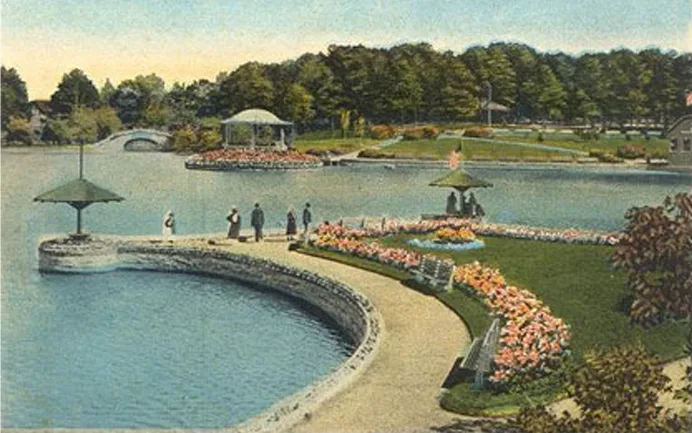
Onondaga Park is an approximately 86-acre city park southwest of downtown Syracuse, opened to the public in July 1898 on a site that began as a reservoir. A steep hillside along Onondaga Avenue splits it into the commonly named upper and lower sections, though the park was treated as a single facility. Its original design followed the naturalistic pleasure ground ideal, with curving drives, rustic stone structures, plantings and planned views. Later changes added recreation features typical of early twentieth century reform parks, including Lake Hiawatha, formed in 1911 from the old reservoir, plus playgrounds, a bathhouse and sports areas. The park contains 47 contributing features, among them buildings, structures, sites and objects such as stone bridges, a pergola and a grotto. It was recognized for retaining two distinct modes of park design and for showing how Syracuse planned large parks on its outskirts to serve a growing population. It remains part of the city's only linked open space system.
Machine-generated summary. This summary was generated by a language model from the official nomination document and has not been reviewed line by line by an editor. It may contain errors. Check the source document before relying on any detail. Source: nomination document (PDF) · catalog entry. Generated October 2026 (model claude-sonnet-5-5, prompt v1.0-2026-10-29).
| Period of significance | 1881-c. 1938 |
|---|---|
| Styles | Other: Arts and Crafts; Other: Rustic; Late 19th and 20th Century Revivals: Colonial Revival |
| Areas of significance | Landscape Architecture, Community Planning and Development |
| Acreage | 86 |
| Boundary source | NPS cultural-resource GIS polygon |
| Full listing page | Onondaga Park (property record) |
What listing means for this property
This is a historic district. Buildings within its boundary are either contributing (they add to the district's significance) or non-contributing. Owners of contributing income-producing buildings can claim the 20% federal rehabilitation tax credit; homeowners should look at state credits. National Register districts impose no design review by themselves; a local historic district ordinance, if one exists, does (the difference explained).
General information, not legal or tax advice. Rules change; confirm with your State Historic Preservation Office or a qualified adviser.