Onondaga Highlands-Swaneola Heights Historic District

Why it's listed
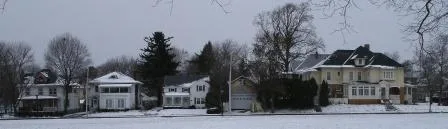
This residential district in southwest Syracuse covers eight streets: Bellevue, Onondaga, Summit, Stolp, Ruskin and Clairmonte Avenues, Beverly Road and Crossett Street. It was built from two adjoining tracts, Onondaga Highlands and Swaneola Heights, mostly between 1901 and 1908. Deed restrictions banned commercial use, limited lots to one single-family house, and set minimum setbacks and house values, which produced consistent streetscapes. The district counts 260 contributing buildings, mainly houses with historic garages, plus three contributing structures including stone retaining walls along Onondaga and Bellevue Avenues. Houses are largely Queen Anne and early twentieth-century revival types, including Colonial Revival, Dutch Colonial Revival and American Foursquare. Three houses designed by Syracuse architect Ward Wellington Ward are individually listed. The neighborhood borders Onondaga Park, and its mature street trees, period street lamps and changes in topography distinguish it from surrounding blocks, which contain more multi-family housing, mixed uses and vacant lots.
Machine-generated summary. This summary was generated by a language model from the official nomination document and has not been reviewed line by line by an editor. It may contain errors. Check the source document before relying on any detail. Source: nomination document (PDF) · catalog entry. Generated October 2026 (model claude-sonnet-5-5, prompt v1.0-2026-10-29).
| Styles | Late Victorian: Queen Anne; Late 19th & Early 20th Century Revivals |
|---|---|
| Areas of significance | Community Planning and Development, Architecture |
| Acreage | 56.6 |
| Boundary source | NPS cultural-resource GIS polygon |
| Full listing page | Onondaga Highlands-Swaneola Heights Historic District (property record) |
What listing means for this property
This is a historic district. Buildings within its boundary are either contributing (they add to the district's significance) or non-contributing. Owners of contributing income-producing buildings can claim the 20% federal rehabilitation tax credit; homeowners should look at state credits. National Register districts impose no design review by themselves; a local historic district ordinance, if one exists, does (the difference explained).
General information, not legal or tax advice. Rules change; confirm with your State Historic Preservation Office or a qualified adviser.