Old Town Green Historic District

Why it's listed
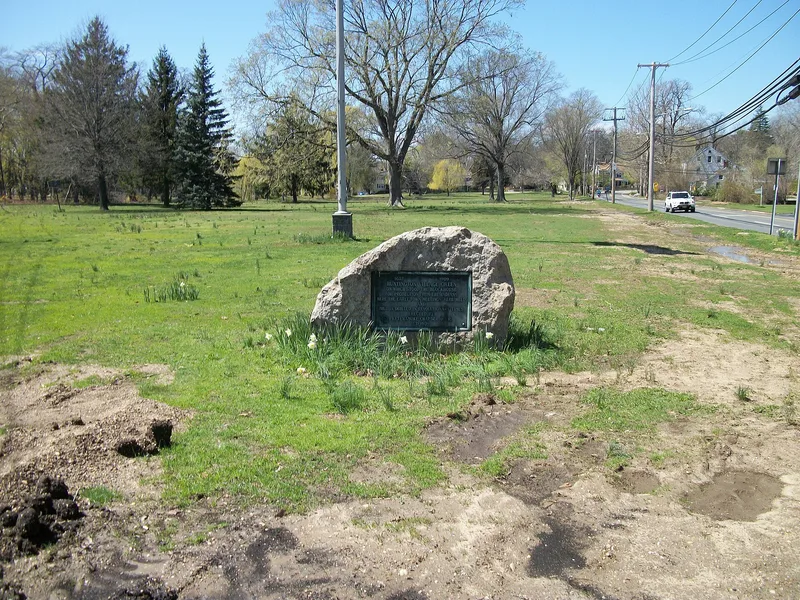
Along the east side of Park Avenue in Huntington village, a cluster of fourteen buildings faces the six-acre town green, the common laid out when the town was founded in 1653. The district's dwellings span the town's first three generations of settlers and the late nineteenth century. The oldest surviving piece is a wing of the Jarvis-Fleet House, built in 1653 by Richard Latting and described as the oldest extant structure in the town. Most houses are two-story clapboard buildings with gable roofs, central chimneys and little ornament, reflecting a conservative local building tradition. The Colonial Arsenal, restored in 1979, served as the town arsenal during the Revolutionary War. The 1881 Scudder House adds picturesque details to a traditional plan. The site of Platt's Tavern, where George Washington dined in 1790, may hold archeological evidence. The district was listed because it preserves the town's earliest settlement and its vernacular architecture.
Machine-generated summary. This summary was generated by a language model from the official nomination document and has not been reviewed line by line by an editor. It may contain errors. Check the source document before relying on any detail. Source: nomination document (PDF) · catalog entry. Generated October 2026 (model claude-sonnet-5-5, prompt v1.0-2026-10-29).
| Styles | Settlement period vernacular architecture, with Federal style details and the late nineteenth century picturesque eclectic Scudder House |
|---|---|
| Areas of significance | Exploration/Settlement, Architecture |
| Acreage | 14 |
| Boundary source | NPS cultural-resource GIS polygon |
| Full listing page | Old Town Green Historic District (property record) |
What listing means for this property
This is a historic district. Buildings within its boundary are either contributing (they add to the district's significance) or non-contributing. Owners of contributing income-producing buildings can claim the 20% federal rehabilitation tax credit; homeowners should look at state credits. National Register districts impose no design review by themselves; a local historic district ordinance, if one exists, does (the difference explained).
General information, not legal or tax advice. Rules change; confirm with your State Historic Preservation Office or a qualified adviser.