North Main Street Historic District

Why it's listed
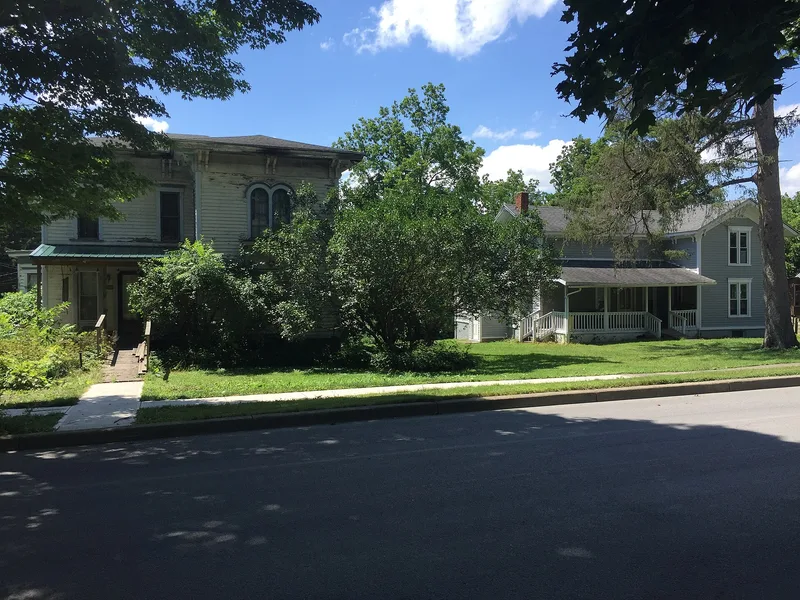
North Main Street and part of Keeler Avenue in Moravia, New York, form a compact residential neighborhood of about 13 acres. Most of its wood-frame and brick houses went up between 1870 and 1890 and show Italianate features such as bracketed eaves and tall narrow windows. Queen Anne and Italian Villa houses and late nineteenth century carriage barns add variety. At the south end, the Brick Store of about 1830 is the village's oldest surviving commercial building and the only non-residential property in the district. Development began after businessman William Keeler bought the Stoyell family land in 1863 and subdivided it. Growth accelerated once the railroad reached the village in 1870, and many lots were occupied by the early 1880s. Merchants, tradesmen, a blacksmith, a banker and a foundry owner lived here. The district was recognized for its architectural cohesion, its intact streetscapes and its link to Moravia's commercial and industrial prosperity.
Machine-generated summary. This summary was generated by a language model from the official nomination document and has not been reviewed line by line by an editor. It may contain errors. Check the source document before relying on any detail. Source: nomination document (PDF) · catalog entry. Generated October 2026 (model claude-sonnet-5-5, prompt v1.0-2026-10-29).
| Period of significance | ca.1830 - ca.1910 |
|---|---|
| Styles | Italianate, Greek Revival, Queen Anne (also Federal and Italian Villa examples) |
| Areas of significance | Architecture, Commerce |
| Acreage | 13 |
| Boundary source | NPS cultural-resource GIS polygon |
| Full listing page | North Main Street Historic District (property record) |
What listing means for this property
This is a historic district. Buildings within its boundary are either contributing (they add to the district's significance) or non-contributing. Owners of contributing income-producing buildings can claim the 20% federal rehabilitation tax credit; homeowners should look at state credits. National Register districts impose no design review by themselves; a local historic district ordinance, if one exists, does (the difference explained).
General information, not legal or tax advice. Rules change; confirm with your State Historic Preservation Office or a qualified adviser.