Miller, William, Farm Historic District (Boundary Increase)

Why it's listed
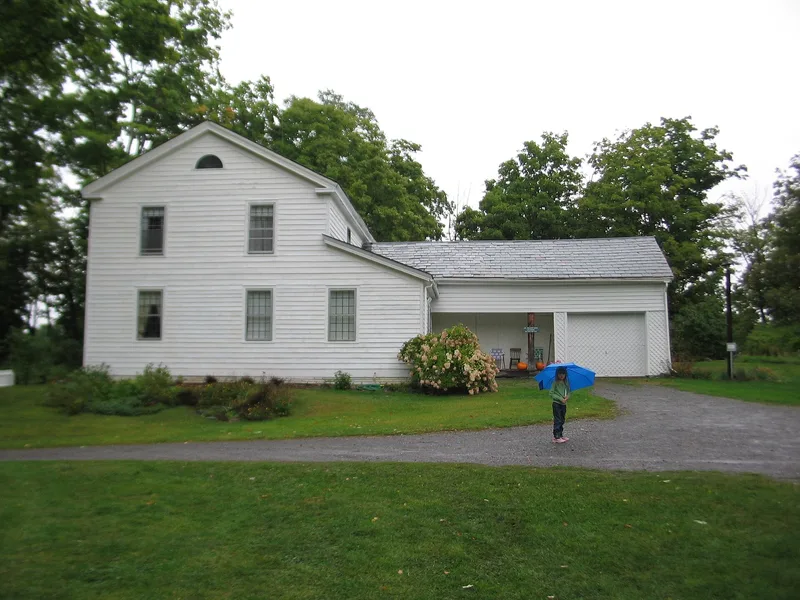
This farm district in Low Hampton, Washington County, New York, covers about 25 acres that once belonged to a 146-acre parcel assembled by William Miller in 1814. It includes his two-story frame house, completed in 1815 and later updated by his son with a Greek Revival doorway and end flues. A complex of seven farm buildings and structures, a limestone quarry and kiln, a maple grove, stone and wire fences, and traces of an orchard record farm life across several generations. Miller also built the chapel here in 1848, and the limestone outcrop called Ascension Rock is where he and his followers waited for the expected end of the world in 1844. The district was recognized as the property most closely tied to Miller, a Baptist preacher shaped by the revival movements of upstate New York. It adds the farm to the chapel and Ascension Rock, which were listed earlier, in 1975. His boyhood home and family cemetery lie nearby but are outside the boundary.
Machine-generated summary. This summary was generated by a language model from the official nomination document and has not been reviewed line by line by an editor. It may contain errors. Check the source document before relying on any detail. Source: nomination document (PDF) · catalog entry. Generated October 2026 (model claude-sonnet-5-5, prompt v1.0-2026-10-29).
| Styles | Federal; Greek Revival; No Style |
|---|---|
| Areas of significance | Religion, Social History, Architecture |
| Acreage | 25 |
| Boundary source | NPS cultural-resource GIS polygon |
| Full listing page | Miller, William, Farm Historic District (Boundary Increase) (property record) |
What listing means for this property
This is a historic district. Buildings within its boundary are either contributing (they add to the district's significance) or non-contributing. Owners of contributing income-producing buildings can claim the 20% federal rehabilitation tax credit; homeowners should look at state credits. National Register districts impose no design review by themselves; a local historic district ordinance, if one exists, does (the difference explained).
General information, not legal or tax advice. Rules change; confirm with your State Historic Preservation Office or a qualified adviser.