Middlefield Hamlet Historic District

Why it's listed
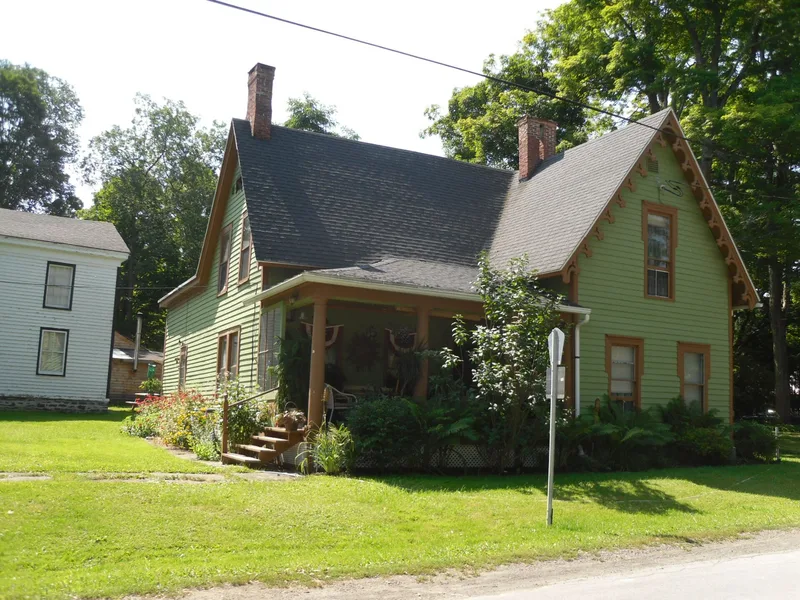
Middlefield Hamlet is a small crossroads community in the Cherry Valley of Otsego County, New York, where 28 properties form a historic district. Most are frame houses built between about 1795 and 1860 in Federal and Greek Revival styles, along with a Greek Revival store, a Carpenter Gothic cottage and a transitional Greek Revival/Italianate house of 1859. The largest building is the Pinney Tavern, a Federal house begun around 1795 and given a portico about 1833; it contains a third-floor hall used by a Masonic lodge and wall painting attributed to William Price. The hamlet, first called Clarksville, prospered on stage traffic and water power, supporting tanneries, mills, stores, inns and a school. Later railroads and highways changed many similar hamlets, but Middlefield's relative isolation and twentieth-century decline left its buildings and layout largely intact. The district is valued as a clear example of how rural crossroads settlements developed through 1910.
Machine-generated summary. This summary was generated by a language model from the official nomination document and has not been reviewed line by line by an editor. It may contain errors. Check the source document before relying on any detail. Source: nomination document (PDF) · catalog entry. Generated October 2026 (model claude-sonnet-5-5, prompt v1.0-2026-10-29).
| Period of significance | 1795-1910 |
|---|---|
| Styles | Federal, Greek Revival, Italianate, and Gothic Revival (vernacular) |
| Areas of significance | Exploration/Settlement, Architecture |
| Acreage | 22 |
| Boundary source | NPS cultural-resource GIS polygon |
| Full listing page | Middlefield Hamlet Historic District (property record) |
What listing means for this property
This is a historic district. Buildings within its boundary are either contributing (they add to the district's significance) or non-contributing. Owners of contributing income-producing buildings can claim the 20% federal rehabilitation tax credit; homeowners should look at state credits. National Register districts impose no design review by themselves; a local historic district ordinance, if one exists, does (the difference explained).
General information, not legal or tax advice. Rules change; confirm with your State Historic Preservation Office or a qualified adviser.