Main Street Historic District

Why it's listed
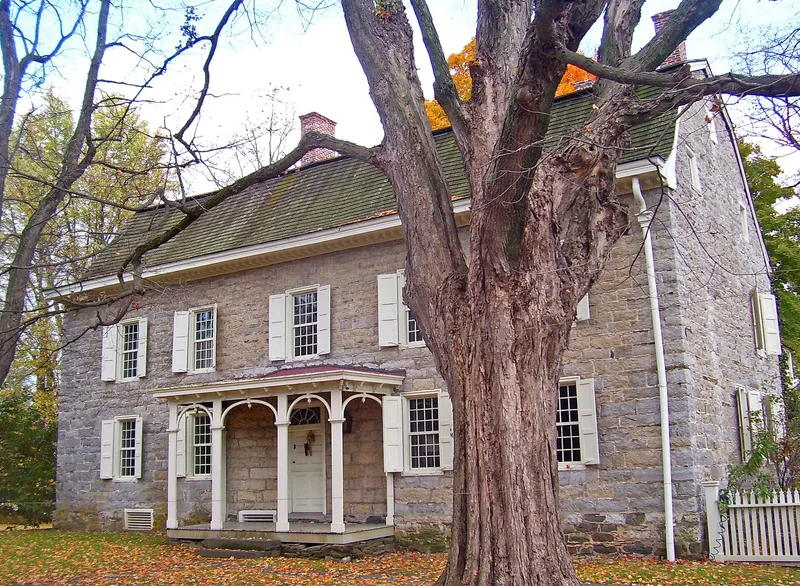
Main Street Historic District covers roughly 70 acres along Route 209 in the hamlet of Stone Ridge, in the town of Marbletown, Ulster County. It contains 36 contributing primary buildings, 50 contributing outbuildings, 5 contributing structures and 1 contributing site. Development followed a single line along the ridge, with outbuildings the only buildings behind the street. The core is seven stone houses from the eighteenth and early nineteenth centuries, including the Hasbrouck House, Tack Tavern and Wynkoop-Lounsbery House. Around them are Greek Revival frame homes and shops from the 1830s to 1850s, including the 1851 Dutch Reformed Church with its colossal Ionic columns. A local building boom in the early twentieth century added Craftsman houses, among them a matched pair of 1925 homes at the south end. The district excludes the modern commercial area to the north. Only the 1936 Town Hall postdates the 1750-1930 period, and the streetscape, trees and layout remain largely intact.
Machine-generated summary. This summary was generated by a language model from the official nomination document and has not been reviewed line by line by an editor. It may contain errors. Check the source document before relying on any detail. Source: nomination document (PDF) · catalog entry. Generated October 2026 (model claude-sonnet-5-5, prompt v1.0-2026-10-29).
| Period of significance | 1750-1930 |
|---|---|
| Styles | Federal, Greek Revival, Craftsman, and regional vernacular stone building tradition |
| Areas of significance | Exploration/Settlement, Architecture, Commerce, Transportation |
| Acreage | 70 |
| Boundary source | NPS cultural-resource GIS polygon |
| Full listing page | Main Street Historic District (property record) |
What listing means for this property
This is a historic district. Buildings within its boundary are either contributing (they add to the district's significance) or non-contributing. Owners of contributing income-producing buildings can claim the 20% federal rehabilitation tax credit; homeowners should look at state credits. National Register districts impose no design review by themselves; a local historic district ordinance, if one exists, does (the difference explained).
General information, not legal or tax advice. Rules change; confirm with your State Historic Preservation Office or a qualified adviser.