Long Island Motor Parkway

Why it's listed
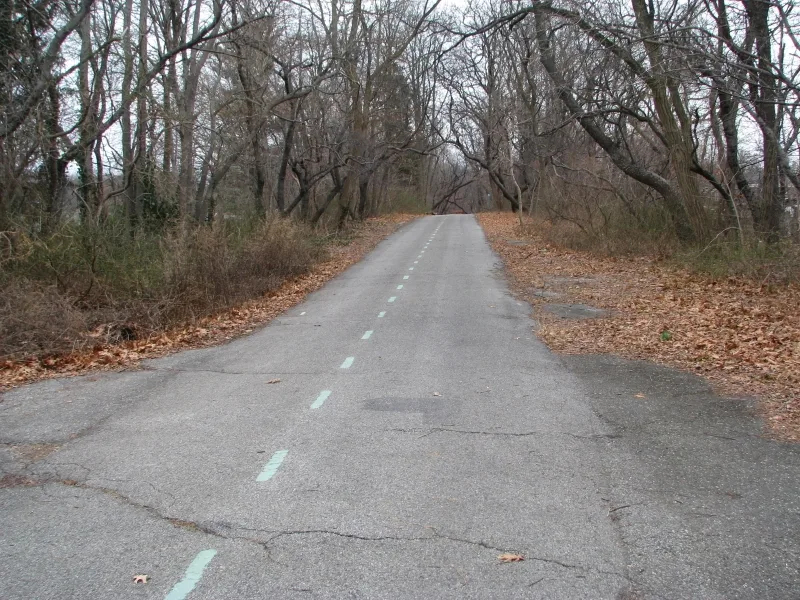
Two surviving stretches of the Long Island Motor Parkway cross parts of Queens, running through Alley Pond Park and Cunningham Park. The parkway was conceived by William K. Vanderbilt, Jr. as a private toll road for automobiles after a deadly 1906 Vanderbilt Cup race. Construction began in 1908, and the road stayed in use until 1938, when newer parkways planned by Robert Moses had superseded it. The district contains seven contributing structures, two roadway sections and five reinforced concrete bridges, along with entrance and exit ramps, concrete bollards and right-of-way markers. One later bridge does not contribute. The Queens portion was built in stages: the eastern part by 1911, and the western extension in 1924-26. Later asphalt covers the original surface in many places, and the road became a bicycle path in 1938. It is considered the earliest paved, limited-access automobile parkway in America, with no grade crossings and a design aimed at pleasure driving.
Machine-generated summary. This summary was generated by a language model from the official nomination document and has not been reviewed line by line by an editor. It may contain errors. Check the source document before relying on any detail. Source: nomination document (PDF) · catalog entry. Generated October 2026 (model claude-sonnet-5-5, prompt v1.0-2026-10-29).
| Period of significance | 1906-1938 |
|---|---|
| Styles | Other: Parkway |
| Areas of significance | Transportation, Entertainment/Recreation |
| Acreage | 10 |
| Boundary source | NPS cultural-resource GIS polygon |
| Full listing page | Long Island Motor Parkway (property record) |
What listing means for this property
This is a historic district. Buildings within its boundary are either contributing (they add to the district's significance) or non-contributing. Owners of contributing income-producing buildings can claim the 20% federal rehabilitation tax credit; homeowners should look at state credits. National Register districts impose no design review by themselves; a local historic district ordinance, if one exists, does (the difference explained).
General information, not legal or tax advice. Rules change; confirm with your State Historic Preservation Office or a qualified adviser.