Lockport Industrial District

Why it's listed
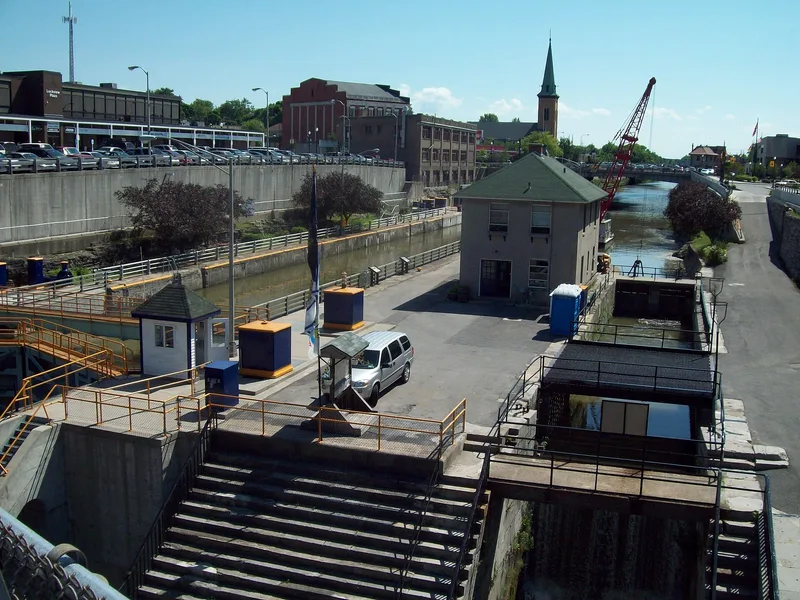
Along the north side of the Erie Canal in Lockport, this 20-acre district brings together the canal's famous double flight of locks and the remains of the industries that grew up beside them. The original ten combined locks of 1825 lifted boats sixty feet over the Niagara escarpment. The 1859 northern flight of five masonry locks survives, though its gates are gone, while two concrete lift locks from 1909-18 now carry traffic. A hydraulic raceway tunnel, cut through solid rock beginning in 1856, once supplied water power to mills along the canal. Those mills included the Holly Manufacturing Company, founded by inventor Birdsill Holly, which made pumps, sewing machines, boxes and ironware. Most of the factories were abandoned or burned by 1909, leaving ruins and foundations plus the stone Bickford Box building. The district was listed for showing how canal transportation and water power built Lockport's economy during the nineteenth century.
Machine-generated summary. This summary was generated by a language model from the official nomination document and has not been reviewed line by line by an editor. It may contain errors. Check the source document before relying on any detail. Source: nomination document (PDF) · catalog entry. Generated October 2026 (model claude-sonnet-5-5, prompt v1.0-2026-10-29).
| Period of significance | 1800-1899 |
|---|---|
| Areas of significance | Engineering, Transportation |
| Acreage | 20 |
| Boundary source | NPS cultural-resource GIS polygon |
| Full listing page | Lockport Industrial District (property record) |
What listing means for this property
This is a historic district. Buildings within its boundary are either contributing (they add to the district's significance) or non-contributing. Owners of contributing income-producing buildings can claim the 20% federal rehabilitation tax credit; homeowners should look at state credits. National Register districts impose no design review by themselves; a local historic district ordinance, if one exists, does (the difference explained).
General information, not legal or tax advice. Rules change; confirm with your State Historic Preservation Office or a qualified adviser.