Linwood

Why it's listed
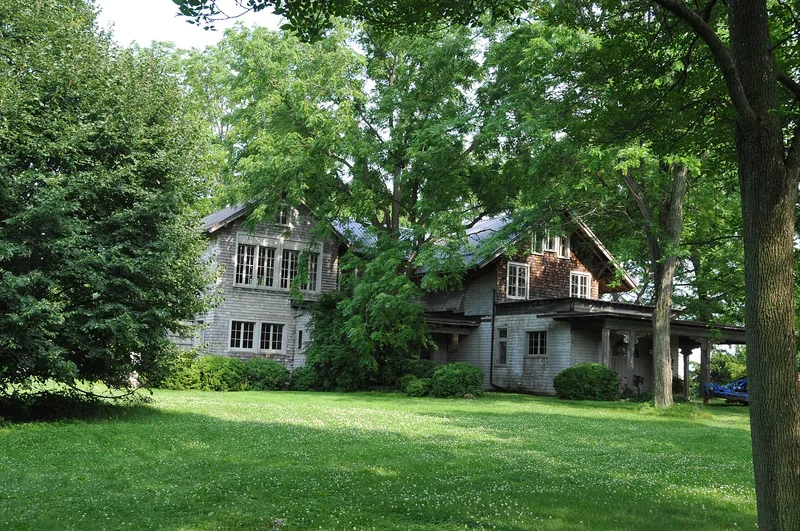
Linwood is a 350-acre country estate in the town of York, Livingston County, New York, about thirty miles south of Rochester. William H. Gratwick II combined four working farms in 1899 and developed them between 1905 and 1915 into a country estate with a long, tree-lined entry drive, two stone bridges, a pond and a ravine. Buffalo architect George Cary and landscape architect Frederic Depuyster Townsend laid out the roads. Gratwick designed the sprawling wood-frame main house in Tudor Revival style with Arts and Crafts detailing, clad in cedar shakes. Around it are formal gardens organized on intersecting axes, including a walled vegetable garden, a lily pool and a peony garden, plus a stone chapel built about 1935. Support buildings include a gambrel-roofed barn, the Annex, a superintendent's house, greenhouses and a lower farm complex. The estate was listed as a district because it keeps the layout and character of a country estate, despite losses such as the 1973 fire.
Machine-generated summary. This summary was generated by a language model from the official nomination document and has not been reviewed line by line by an editor. It may contain errors. Check the source document before relying on any detail. Source: nomination document (PDF) · catalog entry. Generated October 2026 (model claude-sonnet-5-5, prompt v1.0-2026-10-29).
| Styles | Late Victorian; Richardsonian Romanesque (as classified on the form); main house in Tudor Revival with Arts and Crafts detailing |
|---|---|
| Areas of significance | Landscape Architecture, Architecture, Science |
| Acreage | 350 |
| Boundary source | NPS cultural-resource GIS polygon |
| Full listing page | Linwood (property record) |
What listing means for this property
This is a historic district. Buildings within its boundary are either contributing (they add to the district's significance) or non-contributing. Owners of contributing income-producing buildings can claim the 20% federal rehabilitation tax credit; homeowners should look at state credits. National Register districts impose no design review by themselves; a local historic district ordinance, if one exists, does (the difference explained).
General information, not legal or tax advice. Rules change; confirm with your State Historic Preservation Office or a qualified adviser.