Letchworth State Park

Why it's listed
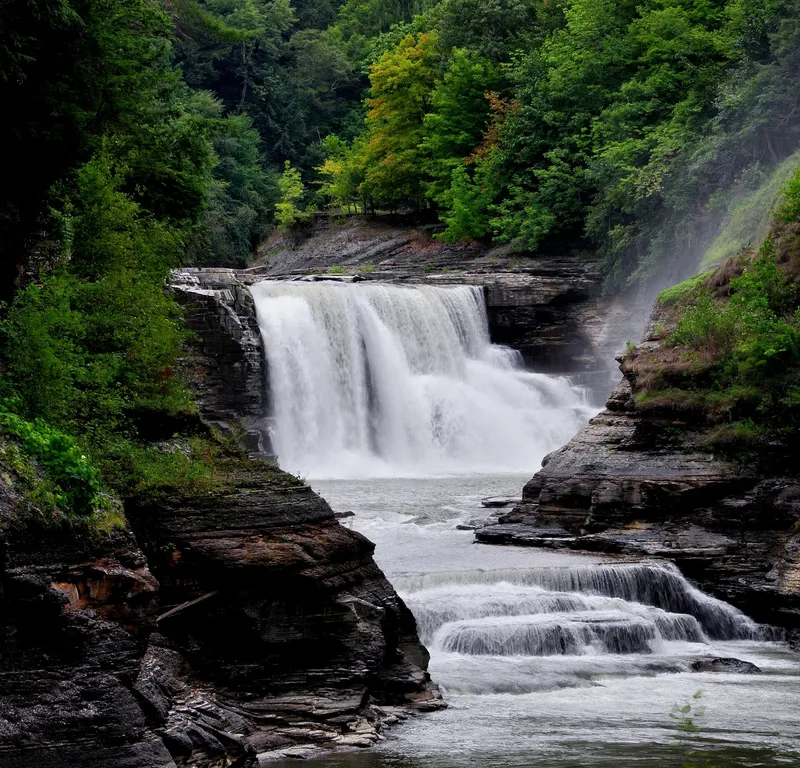
Letchworth State Park occupies about 14,345 acres along a 22-mile section of the Genesee River between Portageville and Mt. Morris, a gorge often called the "Grand Canyon of the East." The river has cut narrow, winding bedrock canyons at both ends, with three major waterfalls in the upper canyon and a flood-control dam at the Mt. Morris end. Most developed land and most historic buildings lie on the west side of the river, near the falls. The district includes natural features, archaeological sites, industrial and railroad remains, canal-related resources, designed landscapes and recreational facilities. It also holds features of the William Pryor Letchworth estate. Letchworth gave his land to the State of New York and the American Scenic and Historic Preservation Society after a hydro-electric dam was proposed that threatened the falls. Two eras of park development followed, under that society and later the New York State Council of Parks. Over one million people visit each year.
Machine-generated summary. This summary was generated by a language model from the official nomination document and has not been reviewed line by line by an editor. It may contain errors. Check the source document before relying on any detail. Source: nomination document (PDF) · catalog entry. Generated October 2026 (model claude-sonnet-5-5, prompt v1.0-2026-10-29).
| Styles | Mid-19th Century Greek Revival and Exotic Revival; Late Victorian Italianate; Colonial Revival; Bungalow/Craftsman; Naturalistic |
|---|---|
| Areas of significance | Agriculture, Architecture, Art, Conservation, Historic - Aboriginal, Engineering, Entertainment/Recreation, Exploration/Settlement, Landscape Architecture, Military |
| Acreage | 14345 |
| Boundary source | NPS cultural-resource GIS polygon |
| Full listing page | Letchworth State Park (property record) |
What listing means for this property
This is a historic district. Buildings within its boundary are either contributing (they add to the district's significance) or non-contributing. Owners of contributing income-producing buildings can claim the 20% federal rehabilitation tax credit; homeowners should look at state credits. National Register districts impose no design review by themselves; a local historic district ordinance, if one exists, does (the difference explained).
General information, not legal or tax advice. Rules change; confirm with your State Historic Preservation Office or a qualified adviser.