Lake Mohonk Mountain House Complex

Why it's listed
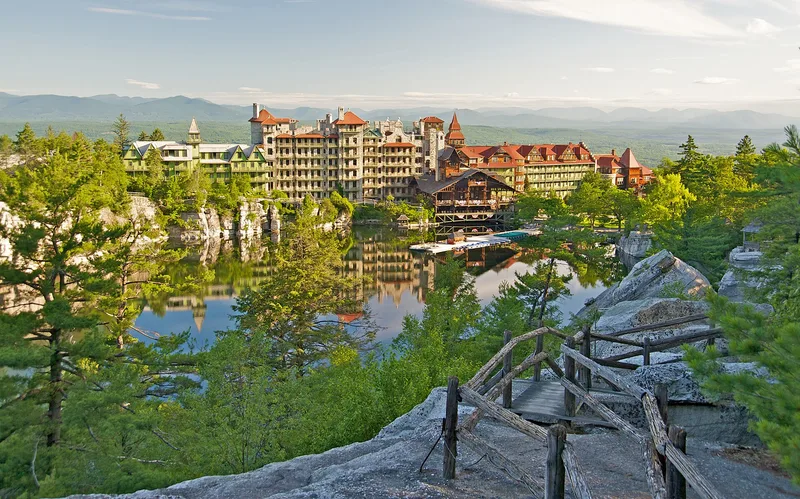
Lake Mohonk Mountain House and its surrounding preserve cover 7,500 acres of the Shawangunk Mountains northwest of New Paltz. The rambling hotel, built in five sections between 1870 and 1902, has stone turrets, wooden gables and spires, runs over 770 feet long and rises three to seven stories beside a glacial lake. The grounds hold 110 miles of trails and carriage roads, gardens, over 140 cottages, Eagle Cliff Tower and the Memorial Tower on Sky Top. Twin brothers Alfred and Albert Smiley bought a small inn and 280 acres in 1869 and ran a temperance resort from 1870. They acquired over 100 adjacent parcels to protect the property. Architects Napolean Le Brun and James Ware designed later work, including the Parlor Wing. From 1883 to 1916 conferences at Mohonk helped shape United States Indian policy, and arbitration conferences began in 1895. The Mohonk Trust, created in 1971, was meant to preserve the wilderness land permanently.
Machine-generated summary. This summary was generated by a language model from the official nomination document and has not been reviewed line by line by an editor. It may contain errors. Check the source document before relying on any detail. Source: nomination document (PDF) · catalog entry. Generated October 2026 (model claude-sonnet-5-5, prompt v1.0-2026-10-29).
| Period of significance | 1890-1902 |
|---|---|
| Areas of significance | Landscape Architecture, Conservation, Health/Medicine, Architecture |
| Acreage | 7500 |
| Boundary source | NPS cultural-resource GIS polygon |
| Full listing page | Lake Mohonk Mountain House Complex (property record) |
What listing means for this property
This is a historic district. Buildings within its boundary are either contributing (they add to the district's significance) or non-contributing. Owners of contributing income-producing buildings can claim the 20% federal rehabilitation tax credit; homeowners should look at state credits. National Register districts impose no design review by themselves; a local historic district ordinance, if one exists, does (the difference explained).
General information, not legal or tax advice. Rules change; confirm with your State Historic Preservation Office or a qualified adviser.