Knox Street Historic District

Why it's listed
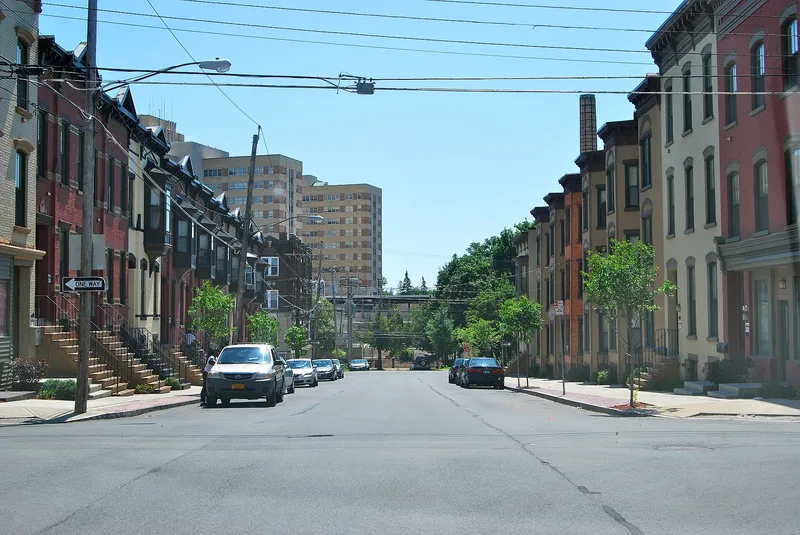
Knox Street in Albany's Park South neighborhood is lined with 24 brick buildings, most of them attached row houses, built largely between 1875 and 1886 as Washington Park was taking shape nearby. The Walsh Brothers, John and Edmund, carpenters and speculative builders who had lived on the street, are believed to have built most of them. The houses mix Italianate, early Queen Anne and modest Romanesque Revival details, including corbelled brick, projecting bays, ornate lintels and heavy wooden cornices. One freestanding house at 137 Knox has a rural character, and an older Federal-style house at 74 Morris Street dates to about 1838, built for nurseryman James Wilson. Surrounded mostly by frame houses, the street stands out for its uniform scale, setback and materials. It was recognized for the architectural quality and cohesion of this small group of rowhouses. Today many of the buildings keep much of their original character, and most are divided into apartments.
Machine-generated summary. This summary was generated by a language model from the official nomination document and has not been reviewed line by line by an editor. It may contain errors. Check the source document before relying on any detail. Source: nomination document (PDF) · catalog entry. Generated October 2026 (model claude-sonnet-5-5, prompt v1.0-2026-10-29).
| Period of significance | c.1838-1886 |
|---|---|
| Styles | Late Victorian: Italianate; Queen Anne (with modest Romanesque Revival and one Federal style building) |
| Areas of significance | Architecture |
| Acreage | 0.8 |
| Boundary source | NPS cultural-resource GIS polygon |
| Full listing page | Knox Street Historic District (property record) |
What listing means for this property
This is a historic district. Buildings within its boundary are either contributing (they add to the district's significance) or non-contributing. Owners of contributing income-producing buildings can claim the 20% federal rehabilitation tax credit; homeowners should look at state credits. National Register districts impose no design review by themselves; a local historic district ordinance, if one exists, does (the difference explained).
General information, not legal or tax advice. Rules change; confirm with your State Historic Preservation Office or a qualified adviser.