Jones Beach State Park, Causeway and Parkway System

Why it's listed
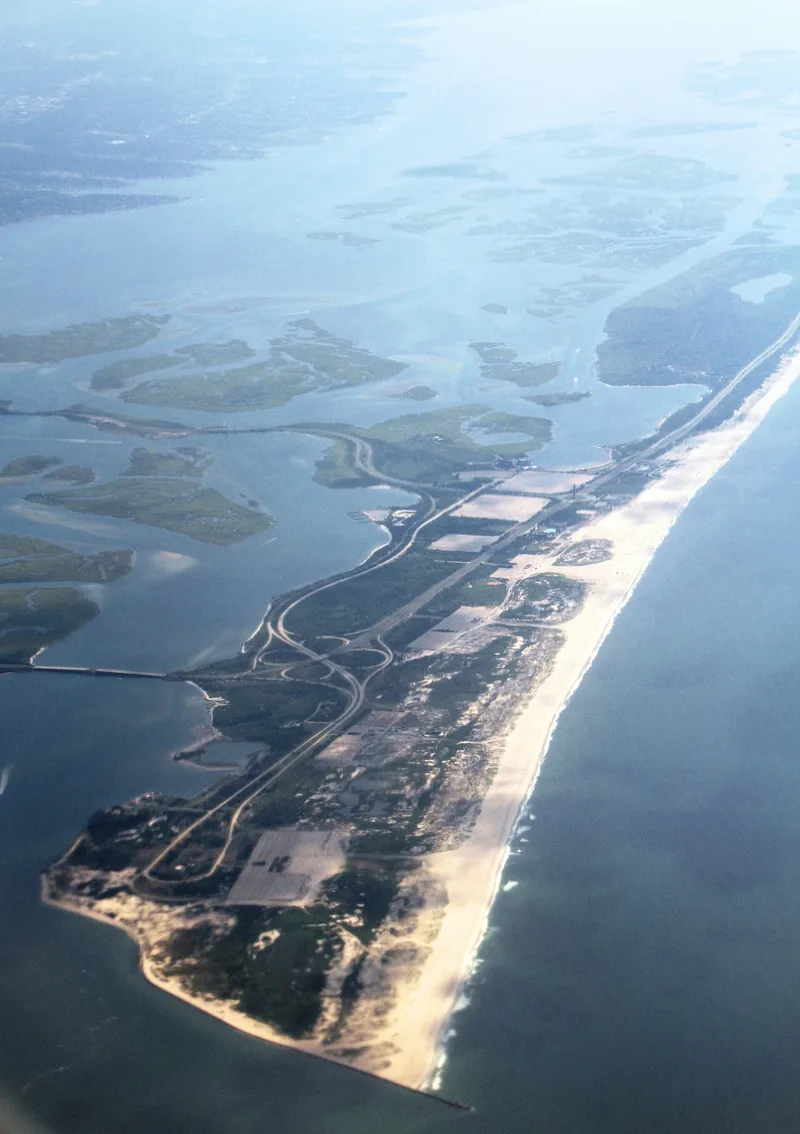
Jones Beach State Park occupies the western part of a long coastal barrier island off the south shore of Long Island, in Nassau County. Before the 1920s the island was nearly inaccessible, so causeways were central to the design. Wantagh and Meadowbrook causeways cross the bay to the mainland, Loop Parkway links the park to Long Beach, and Bay and Ocean Parkways carry traffic within the park. Engineers dredged fill from the bay to raise the island about fourteen feet and built artificial dunes before construction began. The park follows a formal Beaux-Arts plan. A 231-foot brick and sandstone water tower, completed in 1930, anchors the central traffic circle, with symmetrical bathhouses, a mall and a long boardwalk nearby. Other features include pools, golf courses, parking fields, a theater on Zach's Bay and service buildings. Development came in three phases between about 1926 and 1954. The district was listed as a key part of the Long Island State Park and Parkway System, with significance certified at the national level.
Machine-generated summary. This summary was generated by a language model from the official nomination document and has not been reviewed line by line by an editor. It may contain errors. Check the source document before relying on any detail. Source: nomination document (PDF) · catalog entry. Generated October 2026 (model claude-sonnet-5-5, prompt v1.0-2026-10-29).
| Styles | No style (Beaux-Arts plan; Art Deco aesthetic in the water tower; one Colonial Revival residence) |
|---|---|
| Areas of significance | Entertainment/Recreation, Community Planning and Development, Architecture, Landscape Architecture |
| Acreage | 10034 |
| Boundary source | NPS cultural-resource GIS polygon |
| Full listing page | Jones Beach State Park, Causeway and Parkway System (property record) |
What listing means for this property
This is a historic district. Buildings within its boundary are either contributing (they add to the district's significance) or non-contributing. Owners of contributing income-producing buildings can claim the 20% federal rehabilitation tax credit; homeowners should look at state credits. National Register districts impose no design review by themselves; a local historic district ordinance, if one exists, does (the difference explained).
General information, not legal or tax advice. Rules change; confirm with your State Historic Preservation Office or a qualified adviser.