Johnson City Historic District

Why it's listed
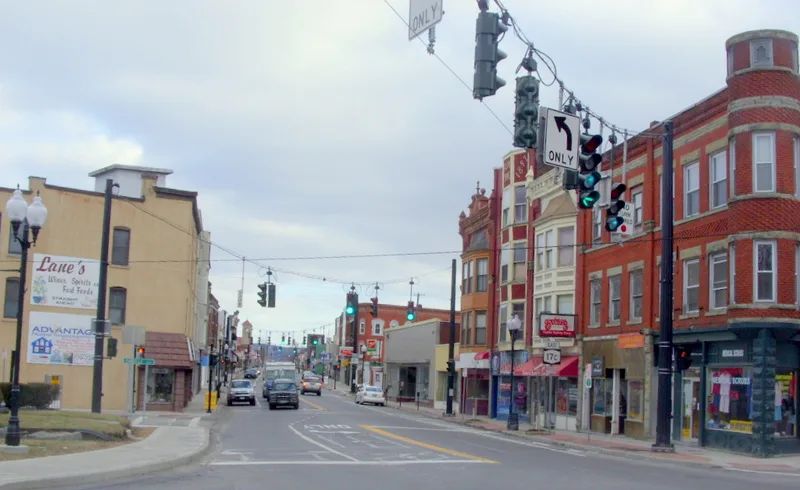
Johnson City's historic district covers roughly eighty acres and twenty blocks on the north side of the Susquehanna River in Broome County. Its core is the parcel the Lester Brothers Boot and Shoe Company platted in 1888, which later grew into the Endicott-Johnson Corporation. The district holds six former factory buildings, a company firehouse, a medical building, a recreation hall, the first Endicott-Johnson retail shoe store and churches built or endowed by the Johnson family. Main Street forms the commercial center, with two- and three-story brick blocks from the late nineteenth century beside one-story storefronts rebuilt after fires and during the 1950s and 1960s. Industrial buildings on Corliss Avenue include the 1916 Pioneer Annex, a reinforced concrete factory, and the 1926 Jigger Factory. The oldest building is a mid-nineteenth century farmhouse at 107 Main Street. The district was listed because it keeps the intact industrial, commercial, civic and residential character of a company-shaped village.
Machine-generated summary. This summary was generated by a language model from the official nomination document and has not been reviewed line by line by an editor. It may contain errors. Check the source document before relying on any detail. Source: nomination document (PDF) · catalog entry. Generated October 2026 (model claude-sonnet-5-5, prompt v1.0-2026-10-29).
| Styles | Various; examples include Italianate, Romanesque Revival, Gothic Revival, Colonial Revival and mid-twentieth century modern commercial |
|---|---|
| Areas of significance | Industry, Social History, Architecture |
| Acreage | 78.6 |
| Boundary source | NPS cultural-resource GIS polygon |
| Full listing page | Johnson City Historic District (property record) |
What listing means for this property
This is a historic district. Buildings within its boundary are either contributing (they add to the district's significance) or non-contributing. Owners of contributing income-producing buildings can claim the 20% federal rehabilitation tax credit; homeowners should look at state credits. National Register districts impose no design review by themselves; a local historic district ordinance, if one exists, does (the difference explained).
General information, not legal or tax advice. Rules change; confirm with your State Historic Preservation Office or a qualified adviser.