Jackson Heights Historic District

Why it's listed
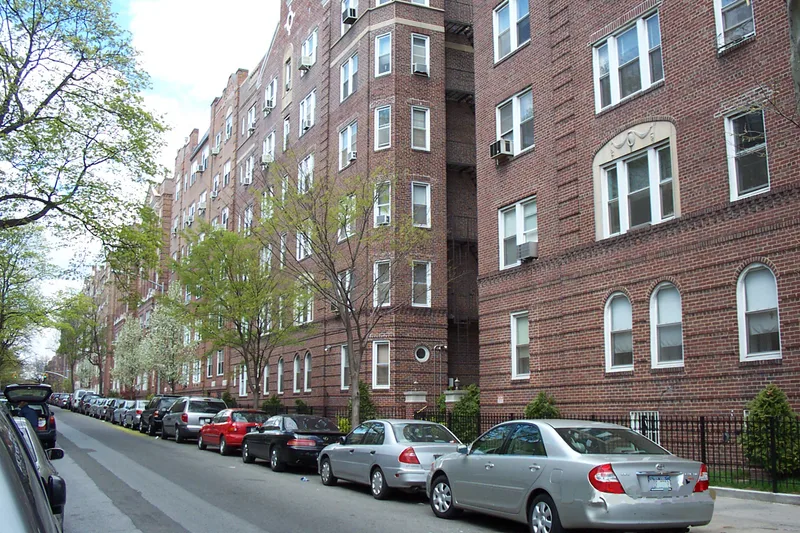
Jackson Heights is a planned garden-city neighborhood in central Queens, about five miles from downtown Manhattan. The Queensboro Corporation began laying it out in 1913 under Edward A. MacDougall, and the nominated area covers roughly ninety acres across eighty-one blocks. Its character comes from block-plan garden apartment complexes, six stories high, wrapped around landscaped interior gardens, along with attached and semi-detached houses, small commercial buildings, schools, churches and parks. Architects George H. Wells and Andrew J. Thomas shaped the apartment complexes, and Thomas's system of block ventilation and apartment planning later served as a model for state and federal housing programs. Houses built from 1924 to 1929 adapted Garden City ideas to a street grid and made provision for automobiles through garages and driveways. Facades are mostly brick in Georgian, Tudor, Mediterranean, Art Deco and Moderne styles. The district contains 2,226 contributing resources, and its historic street plan is counted as part of the significance.
Machine-generated summary. This summary was generated by a language model from the official nomination document and has not been reviewed line by line by an editor. It may contain errors. Check the source document before relying on any detail. Source: nomination document (PDF) · catalog entry. Generated October 2026 (model claude-sonnet-5-5, prompt v1.0-2026-10-29).
| Period of significance | 1913-1949 |
|---|---|
| Styles | Late 19th and 20th Century Revivals (Georgian, Tudor, Mediterranean/Spanish, Art Deco, Moderne) |
| Areas of significance | Community Planning and Development, Architecture |
| Acreage | 300 |
| Boundary source | NPS cultural-resource GIS polygon |
| Full listing page | Jackson Heights Historic District (property record) |
What listing means for this property
This is a historic district. Buildings within its boundary are either contributing (they add to the district's significance) or non-contributing. Owners of contributing income-producing buildings can claim the 20% federal rehabilitation tax credit; homeowners should look at state credits. National Register districts impose no design review by themselves; a local historic district ordinance, if one exists, does (the difference explained).
General information, not legal or tax advice. Rules change; confirm with your State Historic Preservation Office or a qualified adviser.