Hudson Falls Historic District

Why it's listed
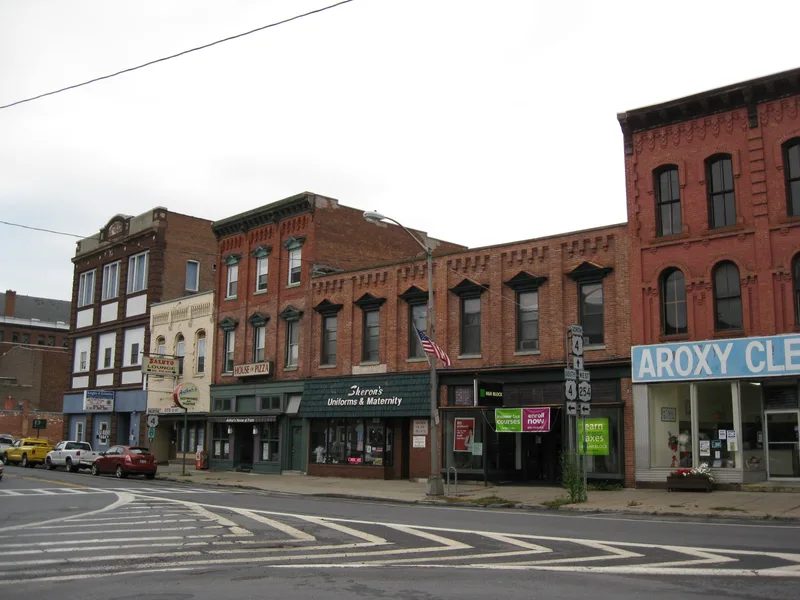
Hudson Falls Historic District preserves the old center of a village perched on Sandy Hill, beside the highest falls of the Hudson River. Its 161 buildings date from 1812 to 1935, though most were built between 1875 and 1900. Federal, Greek Revival, Italianate, Queen Anne and Colonial Revival houses line shaded streets, usually on local limestone foundations and often with original slate roofs. At the center is a triangular village park with an ornate fountain and a Civil War monument. Around it stand three churches, the Washington County Courthouse of 1873, and the library. After a fire in 1876 destroyed the block east of the park, a row of connected brick commercial buildings was quickly erected there, and despite later changes they still show Italianate and Romanesque Revival detail. Twelve buildings are modern or heavily altered and do not contribute. The boundaries were drawn to include the parts of the village with the best integrity.
Machine-generated summary. This summary was generated by a language model from the official nomination document and has not been reviewed line by line by an editor. It may contain errors. Check the source document before relying on any detail. Source: nomination document (PDF) · catalog entry. Generated October 2026 (model claude-sonnet-5-5, prompt v1.0-2026-10-29).
| Period of significance | 1812-1935 |
|---|---|
| Styles | Federal, Greek Revival, Italianate, Queen Anne, Romanesque Revival, Colonial Revival and other vernacular and eclectic styles |
| Areas of significance | Architecture |
| Acreage | 41 |
| Boundary source | NPS cultural-resource GIS polygon |
| Full listing page | Hudson Falls Historic District (property record) |
What listing means for this property
This is a historic district. Buildings within its boundary are either contributing (they add to the district's significance) or non-contributing. Owners of contributing income-producing buildings can claim the 20% federal rehabilitation tax credit; homeowners should look at state credits. National Register districts impose no design review by themselves; a local historic district ordinance, if one exists, does (the difference explained).
General information, not legal or tax advice. Rules change; confirm with your State Historic Preservation Office or a qualified adviser.