Houses at 37-47 North Fifth St.

The National Park Service has not published a boundary polygon for this district; the map shows the listed properties inside it and the district's reference point.
Why it's listed
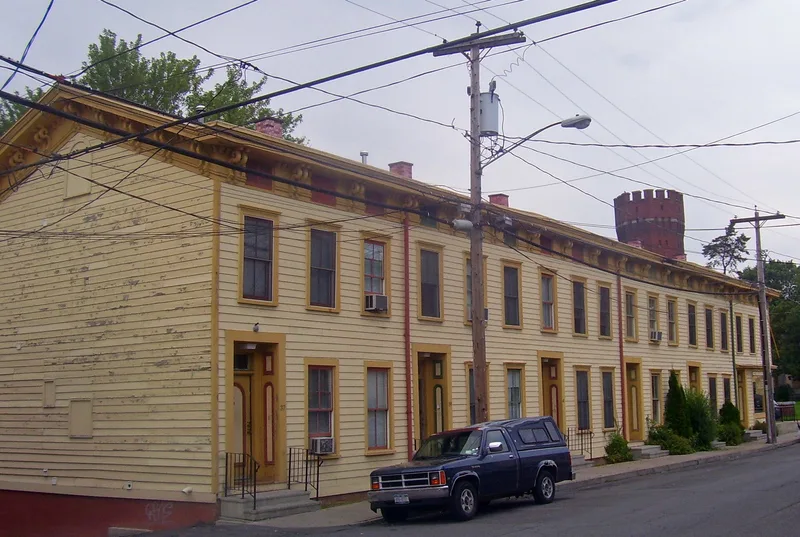
Six nearly identical, attached wood frame rowhouses stand at 37-47 North Fifth Street in Hudson, New York. Built between 1869 and 1871 by builder Freeman Coons, the row was developed by a family of lumber merchants, the Travers, as an investment in rental housing. Each building is two stories and three bays wide, with a continuous gable roof, bracketed cornices, two-over-two windows and side-hall entries; the corner building at #47 has a wraparound storefront. Census records point to working families, including carpenters and printers, living in the flats. The row is considered significant as an intact example of modest working class housing in a neighborhood on Hudson's north side, where plain two-story frame buildings were typical. It reflects the city's nineteenth-century industry and commerce and the demand for affordable homes. After years of poor maintenance, the buildings were rehabilitated and now serve as apartments and counseling offices, with exteriors largely unchanged.
Machine-generated summary. This summary was generated by a language model from the official nomination document and has not been reviewed line by line by an editor. It may contain errors. Check the source document before relying on any detail. Source: nomination document (PDF) · catalog entry. Generated October 2026 (model claude-sonnet-5-5, prompt v1.0-2026-10-29).
| Period of significance | c. 1870 |
|---|---|
| Styles | Late Victorian: Italianate |
| Areas of significance | Architecture |
| Acreage | 0.9 |
| Boundary source | not published |
| Full listing page | Houses at 37-47 North Fifth St. (property record) |
What listing means for this property
This is a historic district. Buildings within its boundary are either contributing (they add to the district's significance) or non-contributing. Owners of contributing income-producing buildings can claim the 20% federal rehabilitation tax credit; homeowners should look at state credits. National Register districts impose no design review by themselves; a local historic district ordinance, if one exists, does (the difference explained).
General information, not legal or tax advice. Rules change; confirm with your State Historic Preservation Office or a qualified adviser.